
Non-Invasive Facial Treatments in SF: What Each Does
Non-invasive facial treatments in San Francisco compared: HydraFacial, peels, microneedling, IPL and dermaplaning, with menu prices and who each one suits.
What "Non-Invasive" Actually Means for Your Face
"Non-invasive" gets used loosely. In skin care it usually means a treatment that doesn't cut the skin, doesn't need anesthesia and doesn't send you home with stitches or a long recovery. It does not mean "nothing happens." A chemical peel makes your skin flake. Microneedling leaves you pink for a day or two. IPL can darken a sun spot before it fades. These are real treatments with real effects, which is why it helps to know what each one is designed to do before you book.
This guide walks through the non-invasive facial treatments Aesthetic OOGII offers in Union Square, San Francisco: HydraFacial, chemical peels, dermaplaning, microneedling with skin growth factors and IPL photofacial. For each one you'll see what it targets, how long a session runs, what it costs on the current menu and who should probably choose something else.
A few ground rules before we start:
- Different tools solve different problems. Congested pores, dullness, texture, redness and sun spots don't all respond to the same treatment.
- Results vary. Skin type, age, sun exposure, medications and how you care for your skin afterward all change the outcome.
- Some conditions need a doctor first. Suspected rosacea, eczema flare-ups, unusual moles or anything that bleeds or changes shape should be seen by a dermatologist before any facial.
If you're not sure where you fall, a consultation is the usual starting point. Oogii offers a complimentary consultation to assess your skin and recommend treatments, so the treatment is picked for your skin, not for a trend. Everything below is general education, not a diagnosis.
HydraFacial and Deep Cleansing: The Low-Downtime Starting Point
If you've never had a professional treatment, a cleansing-based facial is the gentlest place to begin. Two options on the menu fall here.
HydraFacial
HydraFacial is a device-based facial that cleanses, exfoliates, extracts and then infuses the skin with a serum, all in one session. It's popular because there's essentially no recovery period: most people go straight back to work. The menu lists a HydraFacial & Collagen Treatment at $325 for 75 minutes, a HydraFacial & Acne Treatment at $315 for 75 minutes, a 3-session MD package at $600 and a 6-session package at $1,150. It suits dull, congested or dehydrated skin and people who want a "reset" before an event. It isn't a scar treatment, and it won't change deep texture on its own. You can see the full breakdown on the HydraFacial San Francisco page.
Deep Cleansing Treatment
This is the manual, extraction-focused option: a 60-minute session at $150, or six sessions for $650. It's built for clogged pores, blackheads and oily or combination skin. Our deep cleansing facial guide explains what a session includes and why pores clog in the first place.
Who should choose something else
- People with active, inflamed breakouts or open lesions should ask first, since extractions and suction can irritate skin that's already angry.
- Anyone currently on isotretinoin or a strong prescription retinoid should tell the aesthetician before booking.
- If your main concern is deep acne scarring or sun damage, you'll likely need one of the treatments further down this list.
A realistic expectation is a cleaner, brighter, smoother-feeling face for a few days to a couple of weeks. Regular sessions are how people keep that going, which is why the packages exist.
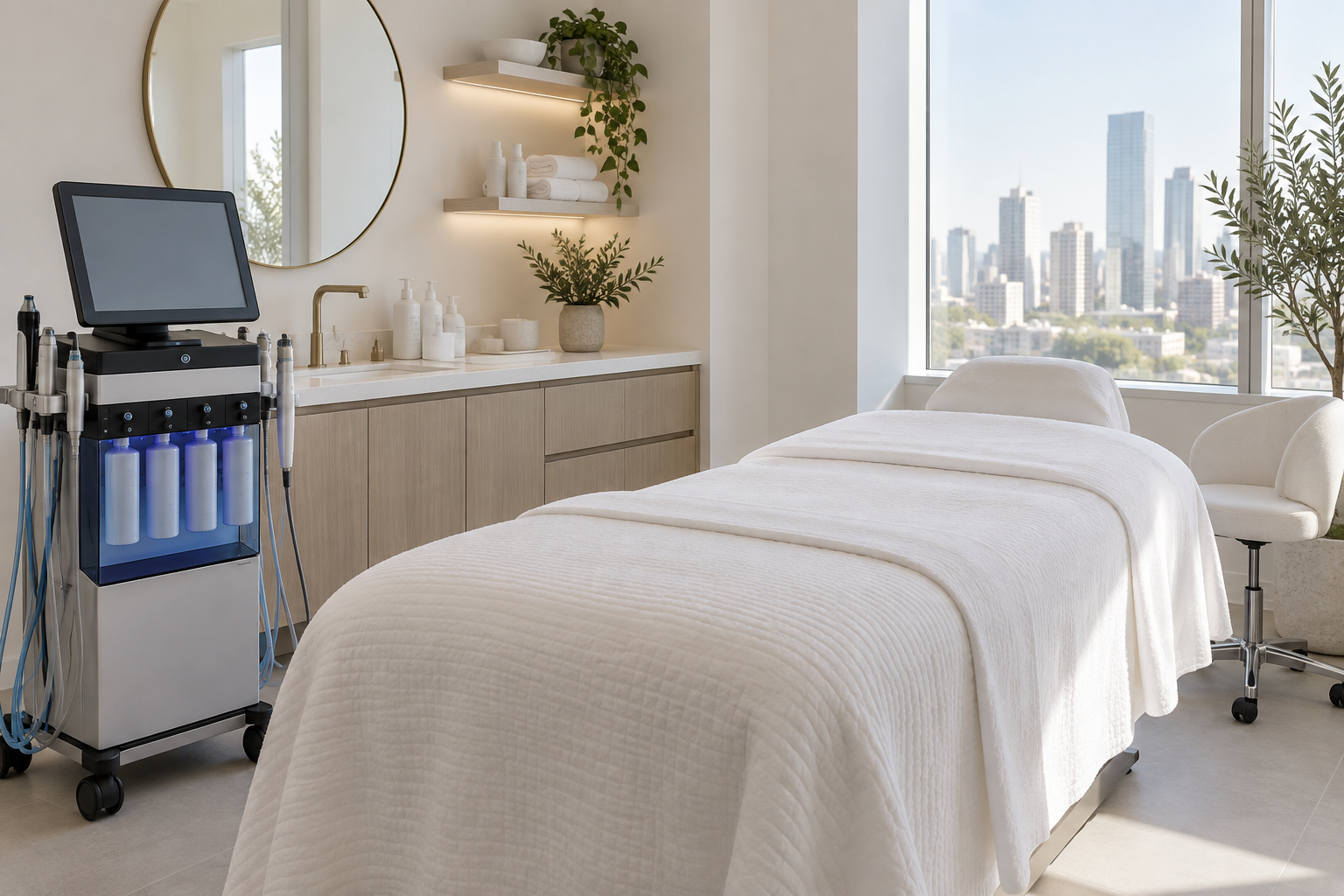
A quiet treatment room: most non-invasive facials are done on a reclined bed in 60 to 75 minutes.
Chemical Peels and Dermaplaning: Resurfacing the Surface
Both of these work on the top layers of skin. They're the next step up when a cleansing facial isn't enough for dullness, rough texture or uneven tone.
Chemical peels
A chemical peel applies an acid solution that loosens and lifts the outer layer of skin so fresher skin shows underneath. Depth matters: a light peel may cause a few days of dryness and flaking, while deeper peels take longer to heal. The menu lists chemical peel treatments at $300 for a 60-minute session, or three sessions for $600. Peels are commonly used for dullness, uneven tone, mild sun damage and some acne-prone skin. They aren't a fit if you have a sunburn, an active cold sore, open or broken skin, or if you're pregnant, and anyone who scars easily or has darker skin should ask about post-inflammatory pigmentation risk first. The chemical peel page covers depths and recovery in more detail, and our peel aftercare guide lays out the day-by-day healing plan.
Dermaplaning
Dermaplaning uses a sterile surgical-style blade to gently scrape away dead skin cells and fine vellus hair ("peach fuzz"). At Aesthetic OOGII it's paired with a clinical treatment using Collagen 90-II or Botinal: $275 for 70 minutes, or three sessions for $650. People like it because makeup sits smoother and products absorb more evenly afterward. Hair will grow back (the idea that it grows back thicker is a myth, though it can feel blunt for a few days).
- Skip it with: active acne breakouts, pustules, sunburn or recent isotretinoin use.
- Expect: mild redness for a few hours and a strict sunscreen rule for the following week.
Read the dermaplaning page for the full pros, cons and who should wait. If your skin is simply dull and you want a low-risk first step, the HydraFacial above is gentler than either of these.
Microneedling: When You're Treating Texture and Scars
Microneedling uses a pen with fine needles to create tiny, controlled punctures in the skin. The body responds by repairing the area, and the treatment is used for fine lines, enlarged-looking pores, rough texture and some types of acne scarring. At Aesthetic OOGII it's done with skin growth factors applied during the session: $300 for 60 minutes, or three sessions for $700.
It's a different kind of treatment from the facials above. Expect a pink, tight, slightly sunburned look for the first day or two and some dryness or flaking after that. Results build over a series of sessions rather than one visit, and spacing between sessions matters, so ask your aesthetician for a plan instead of booking randomly.
Who it suits, and who should wait
- Good candidates: people with shallow to moderate acne scarring, rough texture or visible pores who can commit to a short series.
- Wait or ask a doctor first: anyone with active acne in the area, a skin infection, a history of keloid scarring, or current isotretinoin use.
- Not the right tool for: brown sun spots or visible red vessels. Light-based treatments (next section) are designed for those.
If you're weighing microneedling against laser resurfacing for scars, our laser vs microneedling comparison covers downtime, cost and skin-type considerations side by side. The microneedling page lists what a session includes, and the post on what growth factors add is honest about what the research does and doesn't show. Be wary of anyone who promises scars will "disappear." Improvement is the realistic word.
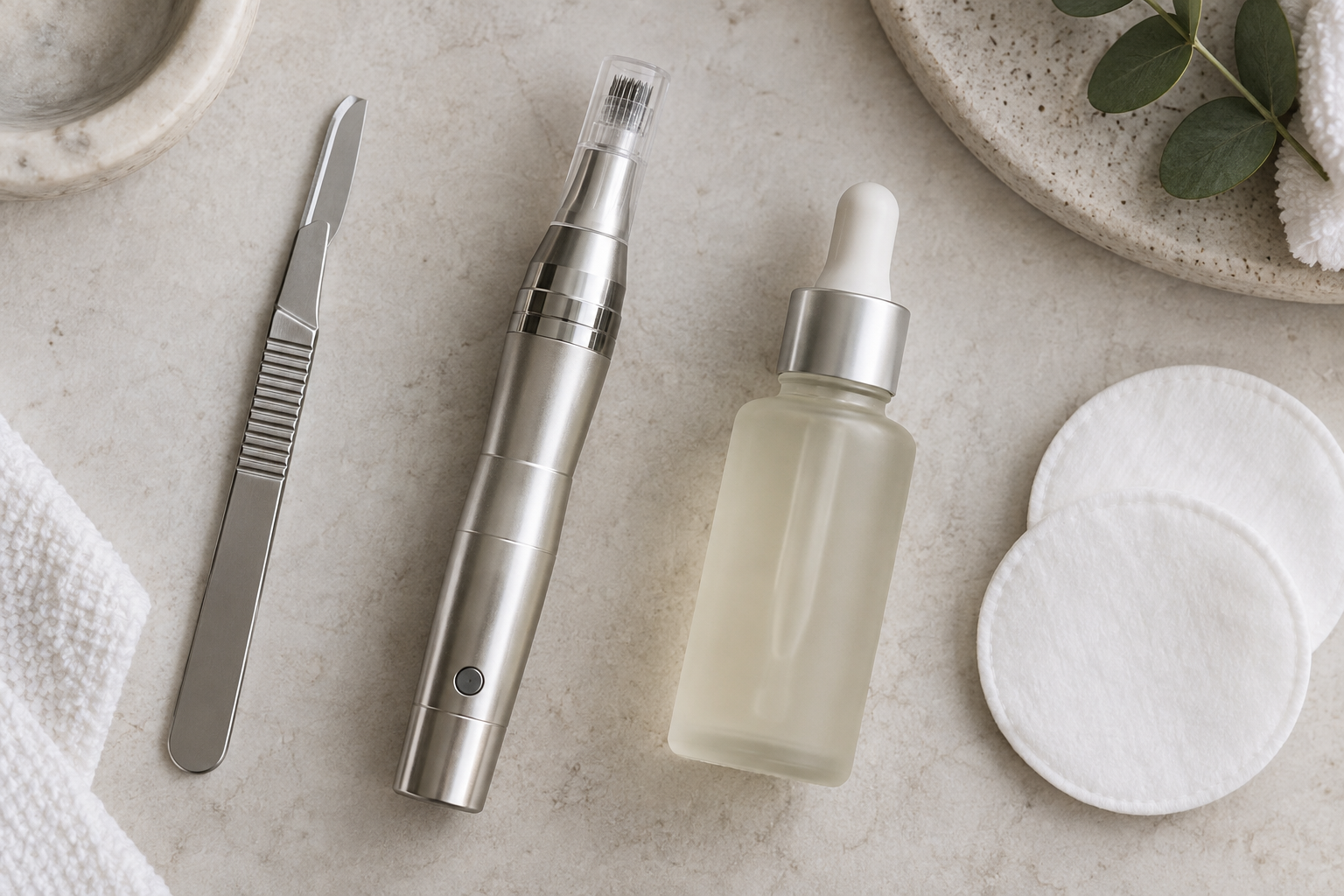
Peels, dermaplaning and microneedling use different tools to work on different layers of skin.
IPL Photofacial: For Sun Spots and Redness
IPL stands for intense pulsed light. Instead of exfoliating or puncturing the skin, a handheld device sends broad-spectrum light into it. Pigment (a brown sun spot or freckle) and blood vessels (diffuse redness or small visible veins) absorb that light, and the body clears the treated areas over the following days and weeks. That makes IPL the right category when your concern is color rather than texture.
The menu lists IPL Photofacial at $300 for 75 minutes, or three sessions for $650. Most people describe the sensation as a quick snap or warm flick. Afterward, treated sun spots often look darker and may flake off over about a week, which surprises people who weren't warned. Sun protection is non-negotiable during the whole series, because treated skin is more sensitive to UV.
Who should be careful
- Tanned or recently sunburned skin. IPL should be postponed until the tan fades.
- Darker skin tones. The risk of pigment changes is higher, so a provider should talk through settings and a patch test before treatment.
- Photosensitizing medications. Some antibiotics and acne medications make skin react to light; list everything you take.
- Anything suspicious. A mole or spot that is new, changing, bleeding or uneven needs a dermatologist, not a photofacial.
If you've heard "BBL" and wondered whether it's the same thing, we explain the difference in IPL vs BBL. For redness specifically, our rosacea and facial redness guide goes through what dermatologists recommend alongside light-based options. The IPL photofacial page has the full list of what it treats and how many sessions people typically need.
How to Choose: Match the Treatment to the Concern
The easiest way to avoid wasting money is to start with the problem you want to solve, not the treatment name. Here's a quick map based on what each option is designed to do:
- Clogged pores, blackheads, oily skin: Deep Cleansing Treatment ($150, 60 minutes) or the HydraFacial & Acne Treatment ($315, 75 minutes).
- Dull, dehydrated skin before an event: HydraFacial & Collagen Treatment ($325, 75 minutes).
- Rough texture, uneven tone, peach fuzz: chemical peel ($300, 60 minutes) or dermaplaning with a clinical treatment ($275, 70 minutes).
- Acne scars, enlarged-looking pores, fine lines: microneedling with skin growth factors ($300, 60 minutes).
- Brown spots and diffuse redness: IPL Photofacial ($300, 75 minutes).
- General signs of aging: the Clinical Anti Aging Treatment ($275, 75 minutes) is the menu's umbrella option, and our anti-aging treatments guide compares peels, microneedling and IPL for that goal.
Combining treatments
Many people don't stop at one. A common pattern is to alternate cleansing facials with a series of a stronger treatment, spaced out so skin can recover in between. The menu includes a 10-session mixed package (4 HydraFacial, 3 Frio Lifting and 3 IPL) at $1,650, which our combination package guide breaks down. If you're curious about Frio Lifting, a cooling-based lifting treatment, read our Frio Lifting guide for what to ask before booking.
Don't stack strong treatments in the same week without professional guidance. A peel followed by microneedling days later can leave skin inflamed, and that's when pigment problems and prolonged redness show up. Tell your aesthetician about everything you use at home, especially retinoids, acids and prescription creams.
You can see every treatment, duration and package price on the full treatment menu, and the consultation is free if you'd rather talk it through before choosing. If something on your skin looks unusual, see a dermatologist first.
Frequently Asked Questions (FAQ)
What are non-invasive facial treatments?
They're skin treatments that don't use surgery, anesthesia or incisions. Examples include HydraFacial, chemical peels, dermaplaning, microneedling and IPL photofacial. Each one still affects the skin and may cause temporary redness, dryness or flaking, but recovery is measured in hours or days rather than weeks.
Which non-invasive facial treatment has the least downtime?
HydraFacial and deep cleansing facials generally have the least downtime, and most people return to normal activities right away. Peels, microneedling and IPL usually involve a day to a week of visible effects, depending on strength and your skin.
How many sessions will I need?
It depends on the treatment and the concern. Cleansing facials are often done on a regular schedule, while microneedling, peels and IPL are usually done as a series of three, which is how the menu's packages are structured. Your aesthetician can give a plan after looking at your skin.
Are these treatments safe for everyone?
No. Pregnancy, active infections, recent sunburn, certain medications such as isotretinoin, a history of keloid scarring and some skin conditions can all rule a treatment out or call for a doctor's approval first. Tell your provider about your full health and medication history before booking.
Can a non-invasive treatment replace a dermatologist visit?
No. A skincare appointment is for cosmetic concerns. Moles that change, persistent rashes, suspected rosacea or eczema flare-ups, and any lesion that bleeds or won't heal should be evaluated by a dermatologist.
About the author
Oogii
Certified Medical & Clinical Aesthetician, Aesthetic OOGII
Certified medical and clinical aesthetician, owner of Aesthetic OOGII, a clinical skincare and medical aesthetics practice at 450 Sutter St in downtown San Francisco.