
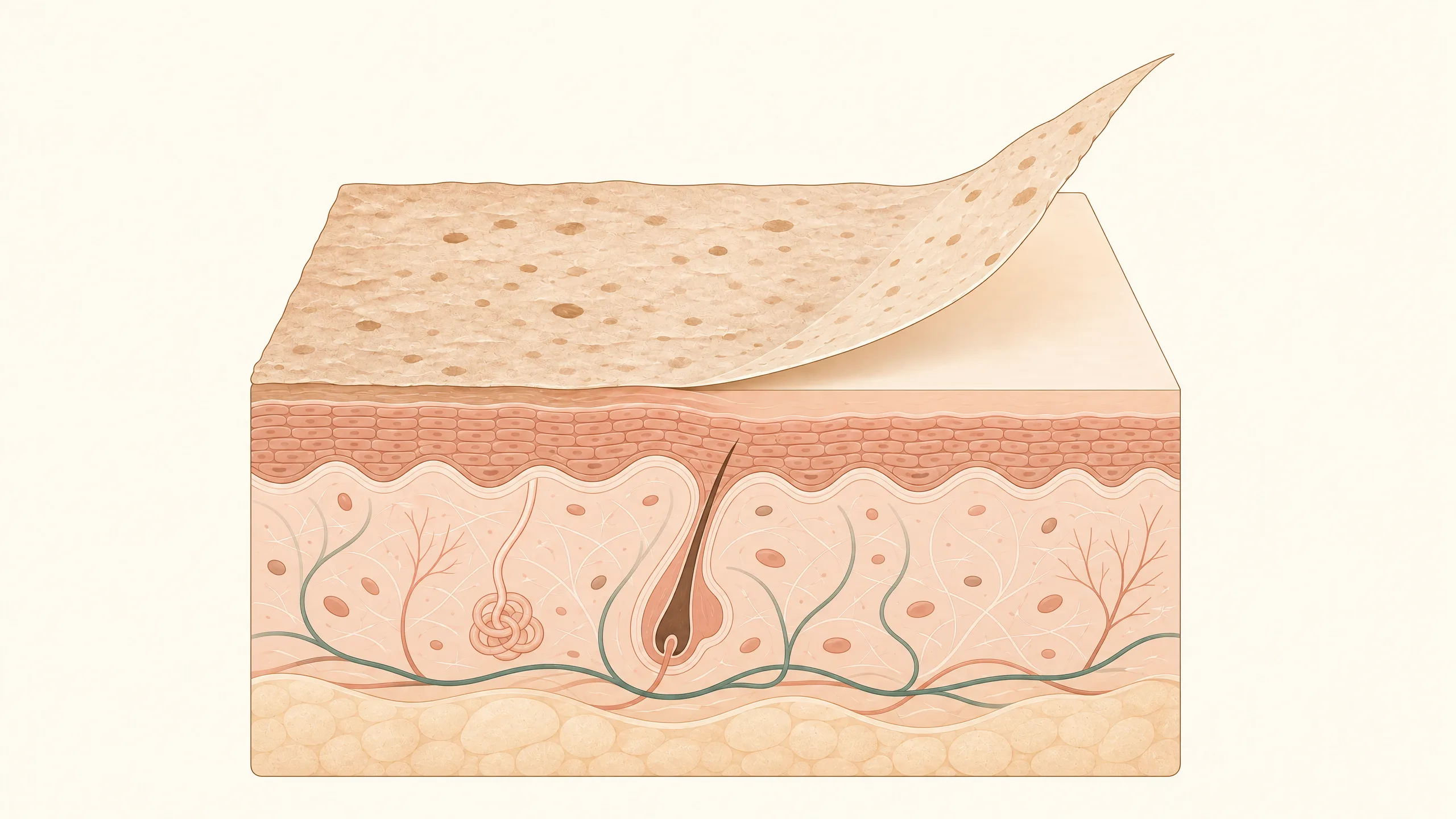

What a chemical peel does
The studio's menu describes a chemical peel as applying a chemical solution to the skin so the top layer peels off, revealing smoother, more youthful-looking skin underneath, and says it can improve the appearance of fine lines, wrinkles, acne scars, hyperpigmentation and sun damage. DermNet lists similar uses: sun damage, pigmentation such as freckles and melasma, fine lines and wrinkles, and acne (DermNet).
Results vary, and one peel is rarely the whole plan. For light peels, Cleveland Clinic says three to five are typically needed, repeated every two to five weeks (Cleveland Clinic). That is general guidance for light peels. The menu offers single sessions ($300) and a three-session package ($600) but does not state the depth of the studio's peel or the spacing between sessions, so confirm both at your consultation before applying these figures to your own plan.
Peel depths and the acids behind them
Different chemicals reach different depths, and the choice depends on your goal (Cleveland Clinic). Cleveland Clinic lists glycolic acid, trichloroacetic acid, salicylic acid, lactic acid and carbolic acid (phenol) among the solutions used, and DermNet describes superficial peels with glycolic acid, salicylic acid or Jessner solution as "well tolerated — the 'lunchtime' peel." Ask at your consultation which peel and strength the studio would use for your skin.
Depth changes everything about recovery. According to the American Academy of Dermatology:
- Light ("refreshing" or "lunchtime") peel: 1 to 7 days of healing. Skin is red, then scaling may develop for 3 to 7 days.
- Medium peel: 7 to 14 days. Skin is red and swollen, swelling worsens for 48 hours, blisters can form, and total sun avoidance is needed until the skin heals.
- Deep peel: 14 to 21 days, performed in a surgical setting under general anesthesia, with the area bandaged.
The recovery details below are the AAD's figures for light peels; ask at your consultation which depth the studio's peel is and which of them apply to you. If you have been told you need something deeper, raise it at your consultation; the AAD's own advice for peels is to see a dermatologist or dermatologic surgeon.
What peels are good for, and what they are not
- Sun damage and dark spots: sun spots, age spots and uneven skin coloring are on Cleveland Clinic's list of what peels help.
- Acne: Cleveland Clinic calls a light peel best for fine wrinkles and acne. For active breakouts, see the studio's acne treatment, whose package adds a chemical peel alongside blue light therapy and CO2 cryotherapy.
- Dull or rough texture and fine lines: Cleveland Clinic lists rough skin, dull complexion and fine lines; the menu and DermNet list fine lines too.
Some problems are beyond a light peel: Cleveland Clinic says a deep peel may be best for extensive sun damage and deep acne scars, and describes it as a one-time treatment with significant downtime. For indented acne scars, the studio's other option is microneedling, which Cleveland Clinic lists for acne scars.
Darker skin tones and sensitive skin
Peels carry more risk for some skin. Cleveland Clinic says the risk of post-inflammatory hyperpigmentation is higher for darker skin tones, DermNet notes that lighter peels are used in darker skin for that reason, and the AAD says people with skin of color should see a dermatologist with expertise in using chemical peels on darker skin. Cleveland Clinic also advises against a peel if you have a history of abnormal skin scarring or cannot stay out of the sun while you heal.
Tell the studio about health conditions, allergies, injuries or recent medical procedures when you book, as its policy asks, and mention any prescription skincare you use.
Recovery after a light peel
The American Academy of Dermatology describes light-peel healing this way:
- First days: skin is red. Apply lotion or cream until the skin heals.
- Scaling: after the redness goes, scaling may develop and last 3 to 7 days.
- Makeup: usually fine immediately after the peel, sometimes the next day.
- After healing: daily sunscreen.
DermNet notes that a peel stings during application, and how much depends on the chemical, its concentration and the person. The aftercare guide covers the days after a peel in more detail.
Where to find us
Aesthetic OOGII is at 450 Sutter St #1530, San Francisco, near Union Square. Oogii is a certified medical and clinical aesthetician, and chemical peels are among the treatments she lists as her expertise. Current pricing is on the treatment menu; if you are weighing a peel against a gentler option first, the HydraFacial page compares the two.