
IPL Photofacial in San Francisco
Intense pulsed light for sun spots, freckling, redness and visible capillaries — $300 for a 75-minute session or three for $650, in Union Square, with a complimentary skin-assessment consultation offered to every client.
- From
- $300
- Duration
- 75 min
Pricing & booking
Choose the option that fits, then pick a time that works for you.
IPL Photofacial
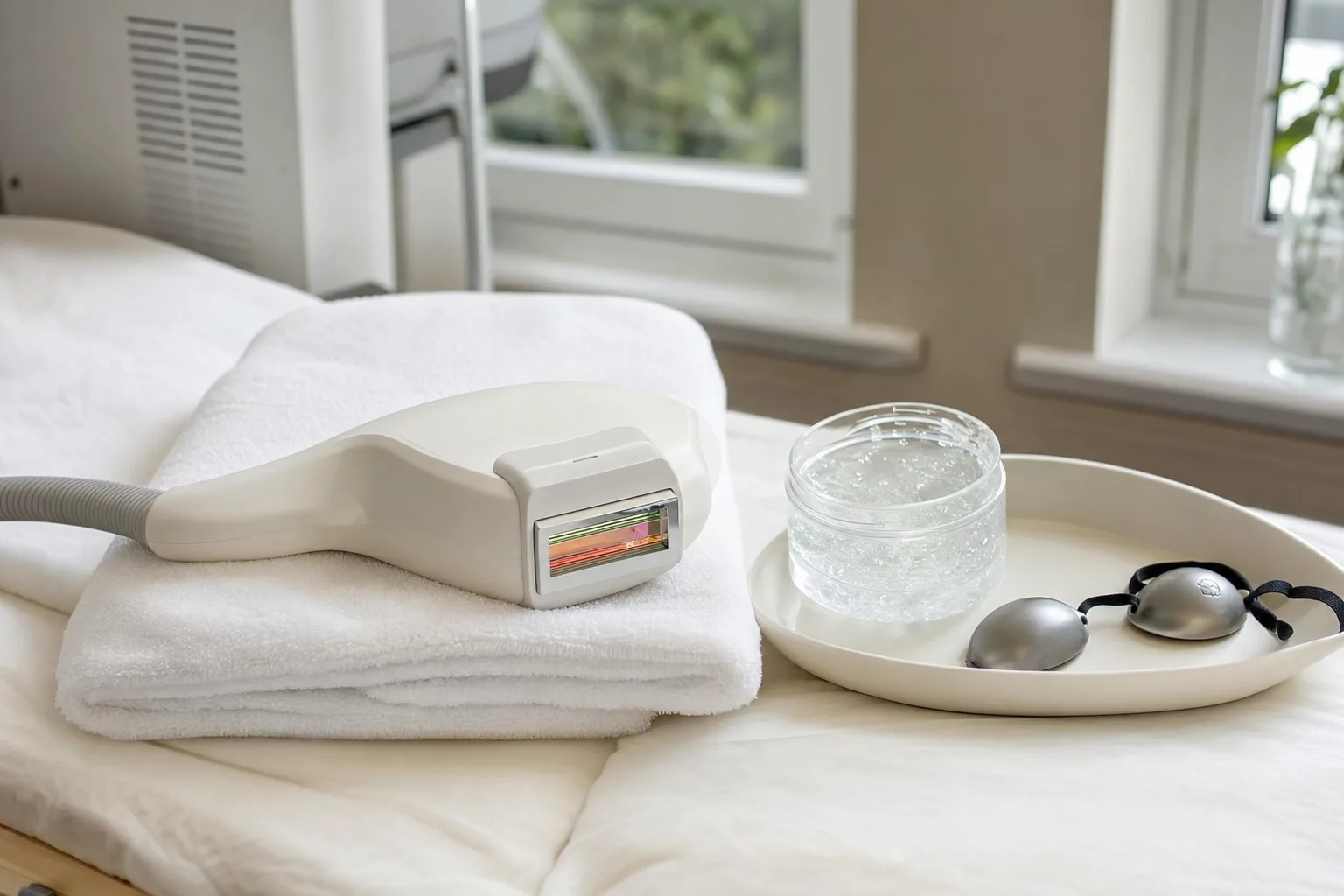
Photofacial uses intense pulsed light (IPL). This uses intermittent flashes of light, rather than a beam of constant brightness. With IPL, the light beam is also spread out a little more, rather than
IPL Photofacial - 3 Sessions Package
Photofacial uses intense pulsed light (IPL) to release intermittent flashes of light. IPL allows the emitted light to be spread out rather than being intensely focused on a small area and is gentler t
Mixed Treatment for 10 Sessions (4 Hydrafacial 3 Frio Lifting 3 IPL)
Short answer: an IPL photofacial at Aesthetic OOGII is a 75-minute appointment at $300 a session, or $650 for a three-session package (about $217 a session). It uses filtered flashes of broad-spectrum light aimed at brown sun spots, freckling and redness from small visible vessels. Results vary: plan on a series rather than one visit, expect a few days of redness and flaking spots afterward, and have your skin assessed first — IPL is not done on a fresh tan, is not suitable for every skin tone, and needs a dermatologist's view first if you have melasma. The studio is at 450 Sutter St #1530 in Union Square.
What IPL is, and why it is not a laser
IPL stands for intense pulsed light. A laser emits one wavelength; an IPL device uses a high-output flashlamp to produce a broad band of non-coherent light, usually somewhere in the 500–1200 nm range, and swaps in cut-off filters to remove the shorter wavelengths that a given treatment does not need. The light is absorbed by three main targets in skin: melanin (brown pigment), hemoglobin (blood in small vessels) and water. Aimed at the first two, the heat breaks up clustered pigment and closes down superficial vessels while the skin around them takes less of the energy.
The studio's own menu describes it the same way: intermittent flashes rather than a beam of constant brightness, with the light spread across a wider area instead of focused on a single point. That spread is why IPL is used for diffuse problems — scattered sun spots across both cheeks, a general flush over the nose — rather than one isolated mark.
What it treats
- Sun spots and freckling. Flat brown marks from years of UV exposure are the classic target. Baylor College of Medicine's dermatology service describes brown spots usually flaking off within five to seven days and reports that IPL provides an average of about 70 percent improvement in signs of sun damage. That is an average, not a promise: the JCAD review notes that some lesions can persist despite adequate treatment.
- Redness and visible capillaries. Hemoglobin absorbs the light, which is why fine red vessels and diffuse flushing can respond. A 2024 systematic review of IPL in rosacea found that most studies showed improvement in both redness and visible vessels, with only mild, short-lived side effects — and also flagged that many of those studies were of low methodological quality. If you have not had your redness diagnosed, start with the facial redness page: redness has more than one cause, and IPL only addresses the vascular kind.
- Uneven, blotchy tone from sun damage. UT Southwestern Medical Center lists age spots, sun damage, rosacea redness, broken blood vessels, freckles and fine wrinkles among IPL's uses on the face and other sun-exposed skin.
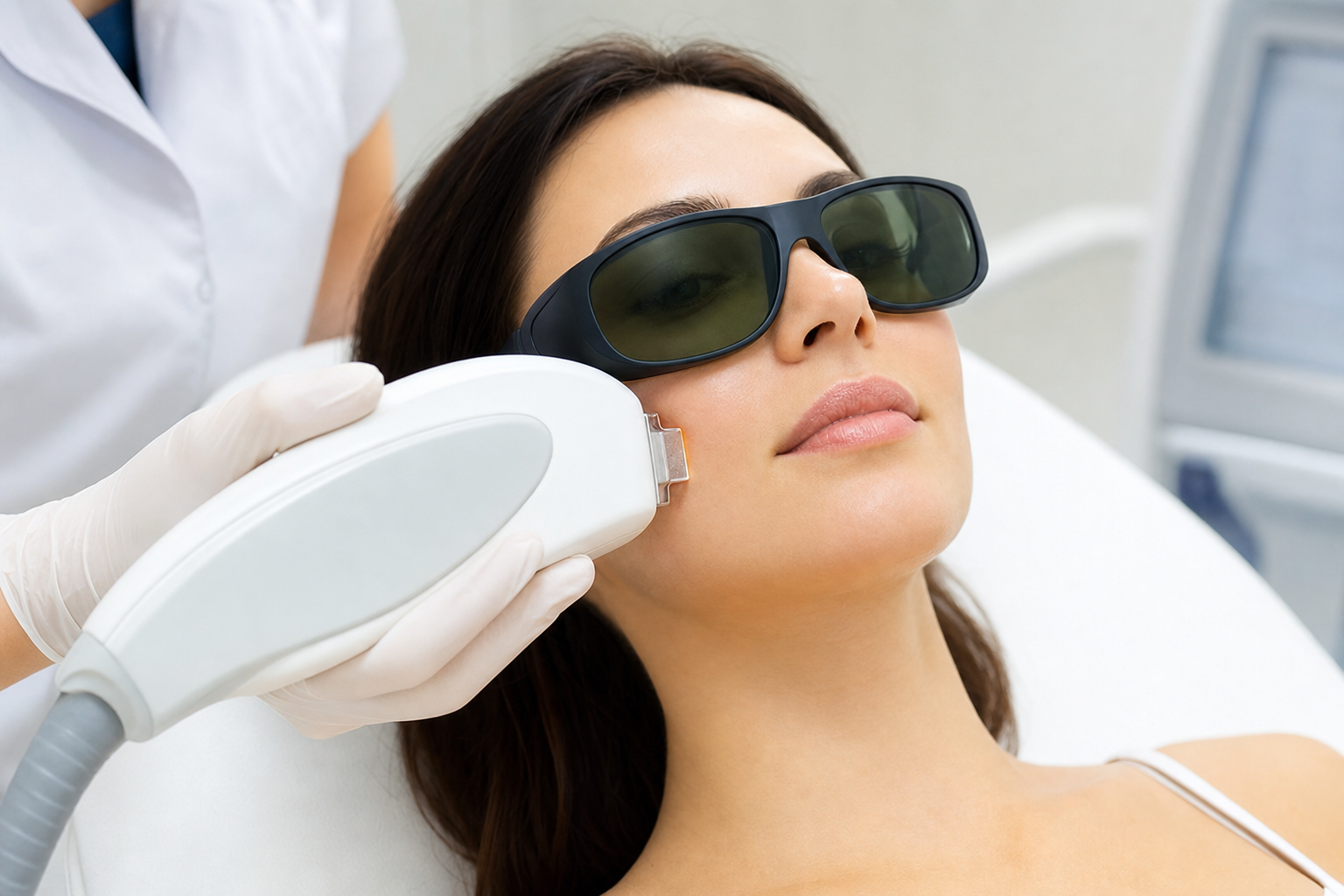
Menu listing: IPL Photofacial, booked as a facial treatment. If you want an area other than the face treated, ask when you book rather than assuming it is included.
Where IPL needs caution, or another treatment
Melasma. The hormonally driven brown patches on the cheeks, forehead and upper lip are a different condition from sun spots. UT Southwestern notes that people with melasma may not be suitable candidates because IPL can worsen existing discoloration. The JCAD review reports IPL has been used for stubborn melasma with varied success, so it is not ruled out in every case — but whether to try it is a decision for a dermatologist, so have melasma assessed before booking IPL.
Indented scars and texture. UT Southwestern includes acne scars among IPL's uses, but IPL's main targets are pigment and vessels. A red or brown mark left behind after a breakout is color; a pitted scar is a change in the skin's structure. On this menu the treatment built for that is microneedling with skin growth factors, and the acne scar page explains how to tell the two apart.
A spot that needs a diagnosis. A pigmented spot that is new, changing, irregular or unlike your others should be seen by a physician before any light treatment. Fading its appearance is not the same as knowing what it is.
Skin tone: the part that decides whether IPL is right for you
Because IPL targets melanin, the melanin in the surrounding skin competes for the same light. The more pigment the skin carries, the higher the risk that the heat lands where it should not. Published guidance is consistent on this:
- A 2012 review in the Journal of Clinical and Aesthetic Dermatology notes that the risk of residual discoloration is greater in darker skin types and that settings have to be adjusted to limit heat damage.
- UT Southwestern states that people with darker skin tones (Fitzpatrick IV–VI) may not be suitable candidates because IPL can cause hyperpigmentation.
- A 2026 narrative review in Plastic and Reconstructive Surgery Global Open on cosmetic treatments for Fitzpatrick IV–VI skin reports an increased risk of bruising-type purpura, darkening, lightening, burns, blistering and crusting with IPL in Fitzpatrick V and VI, and its authors recommended against IPL for those skin types.
A tan counts too, whatever your baseline: Baylor's guidance is to avoid sun exposure ahead of and following treatment because a tan interferes with it. Every client is offered a complimentary consultation with Oogii that includes an assessment of your skin; if you are unsure whether your skin tone is suited to IPL, book that before a session. For deeper skin tones the review above describes microneedling as generally very safe, which is one reason it may be the better route for uneven texture.
Before your appointment
- No sun, tanning beds or self-tanner on the area in the weeks leading up to the session.
- Tell us about every medication. UT Southwestern lists isotretinoin use, pregnancy and active skin infection among the reasons to avoid IPL. The studio's policy asks every client to mention health conditions, allergies, injuries, recent procedures or special needs at the time of booking.
- Arrive with clean, product-free skin on the treatment area.
What the days after look like
Most people go back to work the same day. Expect the skin to look and feel mildly sunburned: UT Southwestern describes temporary redness and swelling that usually lasts hours, and Baylor notes that treated skin can stay red for one to three days, sometimes with a little bruising. Treated brown spots usually flake off within five to seven days. Leave the flakes alone rather than picking or scrubbing them off.
Sun protection is the rule that matters most afterward: SPF 30 or higher every day, and as little direct sun as you can manage. The site's aftercare guide covers what to use and skip in the first week after light treatments.
How many sessions, and what it costs here
Published protocols vary a little. The JCAD review describes three to six treatments spaced three to four weeks apart; UT Southwestern describes a series of five to six sessions, two to four weeks apart; Baylor schedules sessions every four weeks. Improvement usually builds over the series, and how much any one person clears varies — some spots and vessels persist despite adequate treatment. IPL also does nothing to stop UV from making new spots, so daily sunscreen matters for how long any result holds.
- IPL Photofacial — $300, 75 minutes.
- IPL Photofacial, three-session package — $650 (about $217 a session, $250 less than three single visits).
- Mixed Treatment for 10 Sessions — $1,650. Four HydraFacial, three Frio Lifting and three IPL sessions in one package. The combination package guide explains how the sessions are ordered.
Series packages must be redeemed within a calendar year and, like services rendered, are non-refundable. Current pricing is on the treatment menu.
IPL, BBL and lasers
You will see "BBL" advertised in the same breath as IPL. BBL (BroadBand Light) is Sciton's own branded pulsed-light system — the same family of technology, made by one manufacturer. Aesthetic OOGII offers IPL, not BBL. The IPL vs BBL guide covers what Sciton says is different and what the research does and does not show.
Booking and where to find us
Aesthetic OOGII is at 450 Sutter St #1530, San Francisco, CA 94108, near Union Square. Hours are Monday to Friday 9:30 am to 6:00 pm and Saturday 9:30 am to 4:30 pm; call (415) 757-0265 or book from the menu. Popular times fill up, so booking a few weeks ahead helps, and changes need 24 hours' notice — later cancellations are charged 50% of the service and no-shows the full amount. Oogii, a certified medical and clinical aesthetician, lists IPL among the equipment she works with, and the complimentary consultation is the place to ask whether your skin suits it before committing to a series.
Frequently asked questions
- How much does an IPL photofacial cost in San Francisco?
- At Aesthetic OOGII in Union Square an IPL photofacial is $300 for a 75-minute session, or $650 for a three-session package (about $217 a session). IPL is also part of the $1,650 Mixed Treatment package, which combines four HydraFacial, three Frio Lifting and three IPL sessions.
- How many IPL sessions will I need?
- A series, not a single visit. Published protocols describe three to six sessions spaced three to four weeks apart (JCAD review) or five to six sessions two to four weeks apart (UT Southwestern); Baylor schedules sessions every four weeks. Improvement tends to build over the series, but results vary and some spots or vessels can persist despite adequate treatment.
- What does IPL treat, and what doesn't it treat?
- IPL mainly targets color: brown sun spots and freckling, and redness from small visible vessels. It can worsen melasma, so people with melasma may not be suitable candidates and should be assessed by a dermatologist first. For indented acne scars, the studio's menu option is microneedling with skin growth factors.
- Is IPL safe for darker skin?
- Often not. IPL targets melanin, so skin with more pigment absorbs more of the light. Published reviews report higher rates of burns, blistering and darkening or lightening of the skin in darker skin types, and one 2026 review recommended against IPL for Fitzpatrick V and VI. Every client is offered a complimentary consultation that includes a skin assessment; book it first if you are unsure.
- What is the downtime after IPL?
- Most people return to work the same day. Treated skin can look mildly sunburned and stay red for one to three days, sometimes with slight bruising, and treated brown spots usually flake off within five to seven days. Daily SPF 30 or higher and sun avoidance matter most afterward.
- Can I have IPL if I have a tan?
- No. A tan interferes with the treatment and raises the risk of a burn, whatever your natural skin tone. Stay out of the sun and skip tanning beds and self-tanner in the weeks before your session.
- Who should not have IPL?
- UT Southwestern lists pregnancy, isotretinoin use and active skin infection as reasons to avoid IPL, and notes that people with melasma or darker skin tones may not be suitable candidates. A recent tan interferes with treatment. A pigmented spot that is new or changing should be checked by a physician first. Tell the studio about any medication or health condition when you book.
- Is IPL the same as BBL?
- BBL (BroadBand Light) is Sciton's branded pulsed-light system, part of the same family of technology as IPL. Aesthetic OOGII offers IPL, not BBL.