What Is Frio Lifting?
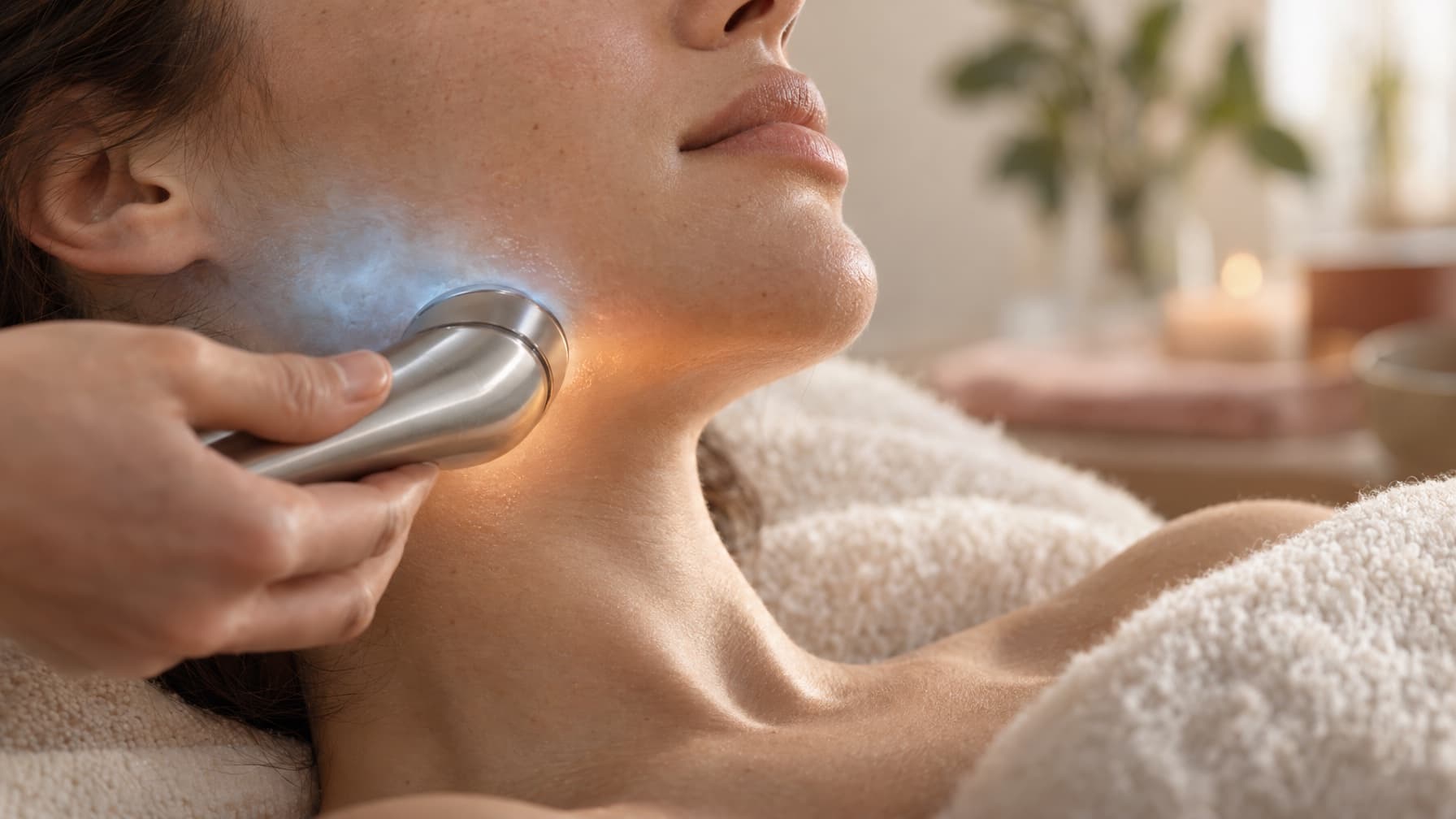
Frio lifting is a non-surgical facial treatment that uses cold, often together with radiofrequency (RF) warmth, with the aim of firming the face and jawline. "Frío" is Spanish for cold, and cooling is part of how these treatments work, but it is not the whole story for every device. One system sold under the FrioLift name, from Zemits, describes itself as a "Cooling RF Contrast" system: RF at 1 MHz and cooling to between 0 and −8°C, applied as a sequence of RF, then cooling, then RF again. The manufacturer calls both methods non-invasive and markets the device for facial skin tightening without volume loss, double-chin slimming, a more defined jawline, reduced puffiness and smoother-looking fine lines around the eyes and mouth. Those are the maker's marketing claims, and its own page adds that results may vary.
Devices differ, so the first question to ask any clinic is which one it uses. The device and settings used at Aesthetic OOGII are something to confirm at your first visit. Unlike Botox or dermal fillers, Frio lifting is not an injection: it does not add volume or relax muscles, and it works from the surface of the skin.
At Aesthetic OOGII, Frio Lifting is offered as part of the 10-session Mixed Treatment package (4 HydraFacial, 3 Frio Lifting, 3 IPL; $1,650). It is not listed on the menu as a single session.
How the Treatment Works, Step by Step
The exact protocol depends on the device, so read this as an outline of the RF-plus-cooling sequence the FrioLift manufacturer describes rather than a fixed script for any particular clinic.
- Step 1, initial RF: the manufacturer's protocol opens with an RF pass, which it describes as providing "a warm sensation".
- Step 2, cooling: a cooling application follows the RF; Zemits lists a range of 0 to −8°C for its device.
- Step 3, finalizing RF: the sequence closes with a second round of RF.
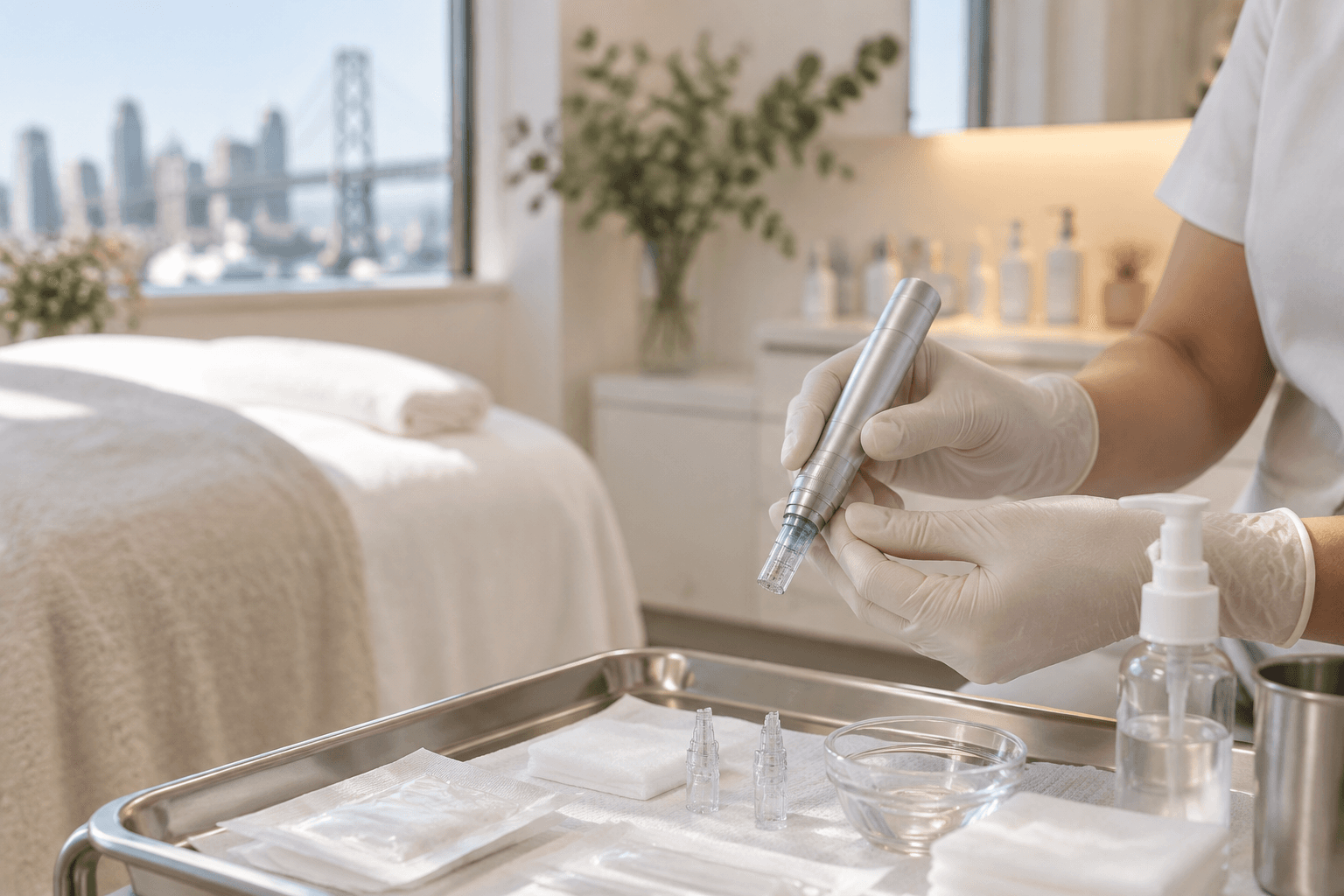
The manufacturer describes the "contrasting temperature variations" as the core of the design. It is a device applied to the skin rather than an injection, but preparation, whether anything is applied to the skin, and how the appointment runs are details to confirm with the provider. Ask before your first session how long the Frio part of the appointment lasts and what it should feel like on the device being used.
A facial mask being applied (illustrative, not a Frio treatment) — Photo by Rosa Rafael on Unsplash
Cost and What Affects Pricing in San Francisco
At Aesthetic OOGII, Frio Lifting is not sold on its own; it comes as 3 of the 10 sessions in the $1,650 Mixed Treatment package, alongside 4 HydraFacial and 3 IPL Photofacial sessions. That averages $165 a session across the ten. For comparison, the four HydraFacial and three IPL visits alone would cost $2,200 at the studio's single-session prices ($325 and $300). The Mixed Treatment package guide walks through that math and who the package suits. Series packages at the studio must be redeemed within a calendar year, and packages are non-refundable, according to its policy page.
If you are comparing clinics, ask a few things before booking:
- Which device: devices sold under similar names can work differently — cold alone, or cold combined with RF.
- Session length: a jawline-only session and a full face-and-neck session are not the same appointment.
- Series length: how many sessions the clinic plans, and what it expects you to see after them.
- Standalone or bundled: whether it is sold on its own, as an add-on, or only inside a package, as at Aesthetic OOGII.
A non-surgical treatment is not a substitute for a surgical lift. If your concern is marked sagging, a consultation with a surgeon is the place to compare options.
Results Timeline: What Is Reasonable to Expect
The FrioLift manufacturer's product page lists the goals (tightening, jawline definition, less puffiness) and says clients may notice improvements after the first treatment, but it gives no session count, week-by-week timeline or duration of results, and we did not find independent clinical data on this device to quote. So treat specific promises with caution, including ones you read online.
What you can plan around is the structure of the package: three Frio Lifting sessions within ten visits that also include HydraFacial and IPL. For IPL on its own, Healthline describes treatments spaced about one month apart (Healthline). How the ten visits in this package are scheduled is not published, so ask for the timetable when you book. A fair point to judge Frio Lifting is after all three sessions, alongside what the HydraFacial and IPL sessions are doing.
Skin type, age and how much laxity you start with all affect what a non-invasive treatment can change. If you are unsure whether your concern is early laxity or something a surgeon should assess, raise it at the complimentary consultation the studio offers every client.
Portrait in natural light — Photo by Fleur Kaan on Unsplash
Frio Lifting vs. Microneedling vs. IPL: Which One Fits Your Goal?
Frio lifting, microneedling and IPL are often mentioned together, but they are different kinds of treatment.
- Frio lifting: Marketed for skin laxity, puffiness and jawline definition. The FrioLift maker also lists improved texture, discoloration and pores among what clients "may experience" after a course; we found no independent evidence for those claims, so do not choose it for scarring or pigmentation on the strength of them. At Aesthetic OOGII it is part of the Mixed Treatment package.
- Microneedling: Fine needles make tiny punctures that prompt the skin to produce new collagen and elastin. Cleveland Clinic lists acne scars, fine lines, wrinkles, enlarged pores and discoloration among its uses. The American Academy of Dermatology says treated skin may look red or darker and feel sunburned, with reactions that usually disappear in a few days to a week. At Aesthetic OOGII it is $300 for a 60-minute session with skin growth factors. See the microneedling page for more.
- IPL photofacial: Uses pulses of light that target pigment and blood vessels. UT Southwestern lists sun damage, age spots, redness from rosacea and broken capillaries among its uses and notes that pigmented areas may darken initially before they flake off over the next few days. At Aesthetic OOGII it is $300 for 75 minutes, or $650 for three. Our IPL photofacial page covers cost and results in detail.
At Aesthetic OOGII, Frio Lifting and IPL are combined with HydraFacial in the 10-session Mixed Treatment package. Of the three, Frio lifting is the one whose marketing centres on sagging and puffiness; the sources above list microneedling mainly for scars, lines and texture, and IPL for sun damage, redness and pigment. Every client is offered a complimentary consultation with Oogii that includes a skin assessment, which is the place to decide which combination fits your skin and budget.
Who Should (and Shouldn't) Try Frio Lifting
The manufacturer markets Frio-type treatment at early firmness concerns — a softening jawline, a double chin, puffiness. Because it is a surface device rather than surgery or an injection, it is also something people look at when they do not want an injectable.
People who tend to consider it include:
- Anyone noticing early signs of sagging who wants a non-surgical option rather than a fix for marked laxity.
- People who prefer a device treatment to Botox or fillers.
- Anyone curious about the Mixed Treatment package who wants to understand what the Frio sessions in it are.
It is not for everyone. Cold exposure can bring on the symptoms of Raynaud phenomenon (MedlinePlus), extreme cold is among the listed triggers of hives (MedlinePlus) — cold urticaria is that reaction — and MedlinePlus also notes that staying away from cold temperatures may prevent some symptoms of cryoglobulinemia (MedlinePlus). If you have any of these, raise it before booking any cold-based treatment. Results for marked laxity or significant jowling are a question for a surgeon. If you are pregnant, talk to your obstetric clinician before starting a new aesthetic treatment.
Aesthetic OOGII's policy asks clients to tell the studio at the time of booking about any health conditions, allergies, injuries, recent medical procedures or special needs, so mention circulation problems, cold sensitivity and recent facial procedures such as fillers then.
FAQ: Frio Lifting in San Francisco
How many Frio lifting sessions do I need to see results?
There is no published standard; the FrioLift manufacturer's page gives no session count. At Aesthetic OOGII, Frio Lifting comes as three sessions within the 10-session Mixed Treatment package ($1,650).
Does Frio lifting hurt?
On an RF-plus-cooling device the manufacturer describes alternating warm and cool phases. Sensation varies by device and settings, so ask the clinic what its device feels like, and whether anything is applied to the skin, before your first session.
Is Frio lifting the same as cryotherapy for the whole body?
No. Whole-body cryotherapy exposes the whole body to very cold air in a chamber. Frio lifting uses a handheld applicator on the face and neck, and FrioLift-type devices pair that cooling with radiofrequency warming.
Can I combine Frio lifting with other facials?
At Aesthetic OOGII it is combined with HydraFacial and IPL in the 10-session Mixed Treatment package. Check the full treatment menu for current options.
How long do results last after a full series?
We could not find a verified figure for how long results last, so be wary of specific promises. Ask at your consultation what the clinic expects after the series and whether it recommends maintenance.