
IPL vs BBL: What's Actually Different?
BBL is Sciton's brand of broadband pulsed light. How it compares with generic IPL on hardware, evidence and skin tone, and which one this studio offers.
BBL is a kind of IPL. BroadBand Light is the name Sciton, a device manufacturer, gives its own pulsed-light system; IPL (intense pulsed light) is the generic category of flashlamp devices it belongs to. Both fire filtered, broad-spectrum light at brown pigment and small blood vessels. The real differences sit in the hardware — filters, cooling, power and speed — and in how much each has been studied. Aesthetic OOGII offers IPL, not BBL.
That is the short version. The longer one matters because "IPL vs BBL" threads tend to swing between two claims that are both too simple: that BBL is just marketing, or that it is a different treatment altogether. Here is what the manufacturer says, what independent research shows, and what should actually decide where you book.
What both devices do
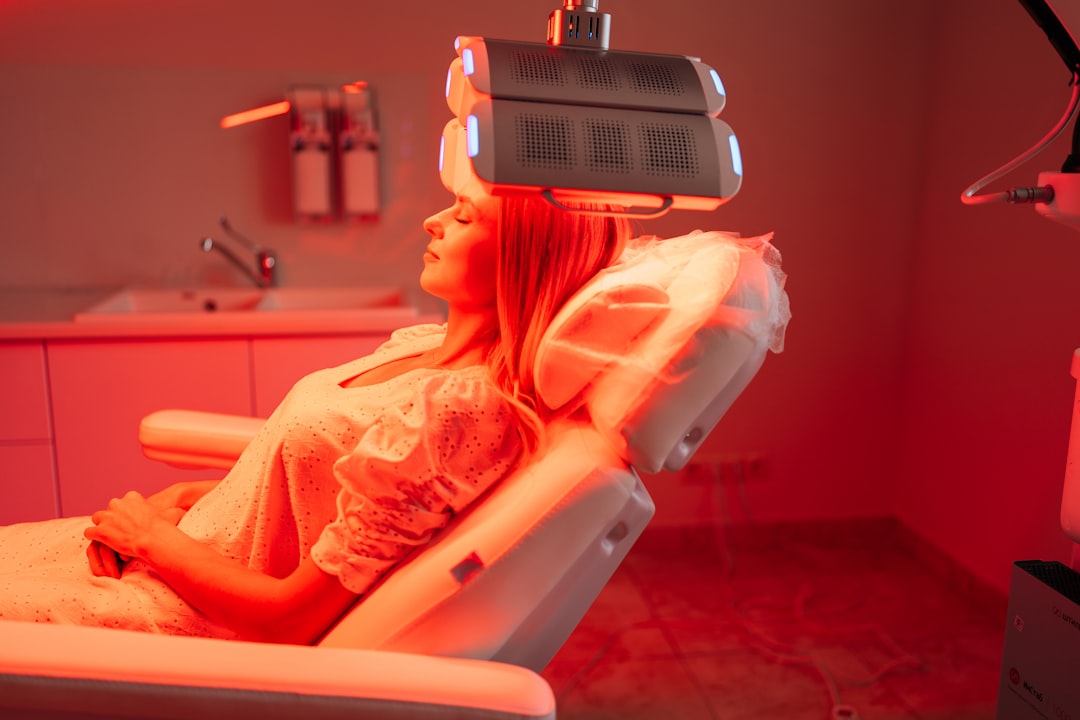
Neither is a laser. A laser emits a single wavelength; an intense pulsed light device uses a high-output flashlamp to produce a broad band of non-coherent light, usually somewhere in the 500–1200 nm range, according to a review of IPL in the Journal of Clinical and Aesthetic Dermatology. Cut-off filters remove the shorter wavelengths a given treatment does not need — the same review lists common filters from 515 to 755 nm — so one device can be set up for pigment on one pass and for vessels on another.
The light is absorbed by three targets in the skin: melanin, hemoglobin and water. Aimed at the first two, it heats clusters of pigment in sun spots and the blood in small superficial vessels, which is why pulsed light is used for sun damage, freckling, visible capillaries and diffuse redness. The same review lists side effects that apply to the whole category: temporary redness, superficial blistering, and patches of lighter or darker skin.
Every one of those statements is true of BBL as well. Sciton's own material describes BBL as employing "high-intensity, pulsed light, similar to IPL." So the useful question is not whether BBL is IPL, but whether its engineering makes a difference you would notice.
What Sciton says makes BBL different
These are the manufacturer's claims, reported as claims:
- Wider spectrum. Sciton says the "BroadBand" in the name refers to a wider wavelength range than other pulsed-light devices, and its Australian site describes BBL as spanning a wider visible spectrum than IPL.
- Interchangeable filters. Sciton describes quick-change "Smart Filters" — nine on its current BBL HEROic handpiece — for switching between pigment, vascular and other settings.
- Speed and cooling. Sciton says its earlier BBL HERO model was up to nine times faster than other IPL devices when fluence, spot size and repetition rate are taken into account, and highlights its handpiece cooling.
- Range of uses. Sciton lists acne, rosacea, pigmented lesions, photoaging, sun spots, vascular lesions and the appearance of skin laxity, plus hair removal, and says BBL HEROic treats skin types I–V on the Fitzpatrick scale.
- One maker. BBL runs on Sciton's own JOULE and mJOULE platforms. Every "BBL" is a Sciton device; "IPL" covers devices from many manufacturers, of varying age and design.
Some of those differences are plausibly meaningful — a faster, better-cooled handpiece can make a session shorter and more comfortable. But none of them has been shown, in an independent head-to-head trial that we could find, to produce better results than other modern IPL devices at matched settings. Many "BBL vs IPL" comparison pages online are written by clinics that own one of the two.
The BBL studies, read carefully
Two separate pieces of research get cited for BBL, and they are easy to blur together.
The long-term maintenance claim. Sciton markets a maintenance program called Forever Young BBL. The claim that patients who keep up an annual or twice-yearly BBL regimen over 5 to 11 years can reduce and delay signs of skin aging comes from a retrospective study by dermatologist Patrick Bitter Jr. and plastic surgeon Jason Pozner, "Retrospective Evaluation of the Long-term Antiaging Effects of BroadBand Light Therapy," published in Cosmetic Dermatology (a supplement to Cutis) in February 2013. It looked back at 15 people, aged 38 to 69 with Fitzpatrick skin types I–IV, who had at least one full-face BBL treatment a year. Blinded evaluators estimated their ages from photographs taken before the first and after the last treatment; the paper reports that the median difference between evaluators’ estimated age after the last treatment and participants’ actual age before the first was −2 years, a result that was not statistically significant (P=.44). It does not show that treatment reversed or stopped aging. The authors list its limitations themselves — a small number of participants, before and after photographs that were not standardized (Polaroid versus digital, years apart), and no specific grading criteria — and both disclose ties to Sciton as investigators and speakers, with Dr. Pozner also a shareholder. It had no comparison group treated with another device.
The Stanford gene-expression pilot. A different paper — Chang and colleagues, "Rejuvenation of gene expression pattern of aged human skin by broadband light treatment," in the Journal of Investigative Dermatology in 2013 — is described by its own authors as a pilot study. It measured gene expression in skin samples and found that of 2,265 RNAs whose expression differed with aging, 1,293 shifted toward a more youthful pattern after BBL treatment. That is an interesting finding about biology. It is not a trial comparing BBL with another IPL device, and gene expression is not the same thing as a visible result on your face.
Neither piece of work compared BBL with other pulsed-light devices, so neither can tell you that another IPL would not do the same.
What independent research says about pulsed light in general
The broader evidence base is for IPL as a category, and it is reasonably encouraging with honest caveats:
- Sun damage. Baylor College of Medicine's dermatology service reports an average improvement of about 70 percent in signs of sun damage with IPL, with treated brown spots usually flaking off within five to seven days.
- Rosacea redness. A 2024 systematic review in the Indian Journal of Dermatology, Venereology and Leprology found that most studies showed IPL reducing both redness and visible vessels in rosacea, with mild, short-lived side effects. The same authors flagged the poor quality of many of those studies and called for better trials.
- Number of sessions. The JCAD review describes three to six treatments spaced three to four weeks apart; UT Southwestern Medical Center describes a series of five to six sessions two to four weeks apart.
Skin tone applies to both
This is where the brand debate matters least. Both devices work by getting melanin to absorb light, so skin that carries more melanin competes for that energy. A 2026 narrative review in Plastic and Reconstructive Surgery Global Open, focused on cosmetic treatments for Fitzpatrick IV–VI skin, reports an increased risk of purpura, darkening, lightening, burns, blistering and crusting with IPL in Fitzpatrick V and VI, and its authors recommended against IPL in those skin types. UT Southwestern says people with Fitzpatrick IV–VI skin or melasma may not be suitable candidates because IPL can cause or worsen discoloration.
Sciton's statement that BBL HEROic treats types I–V is a manufacturer claim; it does not change the underlying physics for type V skin, and it says nothing about type VI. Whichever device you are considering, the first question is whether your skin is a candidate at all, and a tan — Baylor notes that a tan interferes with treatment — puts almost anyone temporarily out of range.
How to choose where to book
Because the mechanism is shared, the questions that predict your experience are mostly about the person and the plan rather than the logo on the machine:
- Was your skin type assessed before anything was booked? A skin assessment helps decide whether pulsed light suits you and lowers the risk of treating skin that should not be treated, such as darker or recently tanned skin.
- Is the concern actually a pulsed-light concern? Sun spots, freckling and vascular redness are its main targets. Melasma can be worsened by IPL and needs a dermatologist's assessment first, and indented scars and sagging are better matched to other treatments.
- How many sessions does the plan assume, at what spacing, and what does the full course cost? Compare series prices, not the first appointment.
- What is the aftercare and sun-protection plan? Pulsed light treats existing pigment, with results that vary; it does not stop UV from making new spots.
If a specific provider's BBL is closer, fits your schedule, or you have had good results on it before, that is a perfectly good reason to book it. What there is not good evidence for is paying a premium on the assumption that the name alone guarantees a better outcome.
What Aesthetic OOGII offers
The studio offers IPL — the menu item is IPL Photofacial — and does not offer BBL. The menu describes it as intermittent flashes of light, spread over a wider area rather than focused on a single point. Prices:
- IPL Photofacial: $300 for a 75-minute session.
- IPL Photofacial, three-session package: $650.
- Mixed Treatment for 10 Sessions (four HydraFacial, three Frio Lifting, three IPL): $1,650.
Every client is offered a complimentary consultation with Oogii, a certified medical and clinical aesthetician, which includes an assessment of your skin. The IPL photofacial page covers what a session involves, the days afterward and who should skip it; the facial redness page helps if you are not sure your redness is the vascular kind.
FAQ: IPL vs BBL
Is BBL better than IPL?
BBL is a type of IPL made by Sciton, and Sciton claims advantages in wavelength range, filters, speed and cooling. We could not find an independent head-to-head trial showing BBL outperforms other modern IPL devices at comparable settings. Candidacy, settings and a realistic series matter more than the brand.
Is BBL a laser?
No. Like other IPL devices it uses a flashlamp and emits a broad band of light rather than a single laser wavelength. Sciton lists its lasers separately from BBL.
Does Aesthetic OOGII offer BBL?
No. The studio offers IPL Photofacial at $300 a session or $650 for three sessions, and IPL is also part of the $1,650 Mixed Treatment package.
Can darker skin have IPL or BBL?
Often not. Both rely on melanin absorbing light, so darker skin carries a higher risk of burns and pigment changes. A 2026 review recommended against IPL for Fitzpatrick V and VI. Get a skin-type assessment before booking either.
How many sessions do IPL and BBL need?
Published protocols for pulsed light describe three to six sessions, a few weeks apart, depending on the source and the concern. Sciton also promotes ongoing maintenance treatments for BBL.
Is a photofacial the same as IPL?
Usually, yes. "Photofacial" is the common name for an IPL treatment of the face, and it is how the studio's menu lists it.
About the author
Oogii
Certified Medical & Clinical Aesthetician, Aesthetic OOGII
Certified medical and clinical aesthetician, owner of Aesthetic OOGII, a clinical skincare and medical aesthetics practice at 450 Sutter St in downtown San Francisco.