Why Aftercare Matters
How you look after your skin once you leave is part of the treatment. The AAD notes that serious complications after a chemical peel have occurred when patients did not follow the dermatologist's instructions, and that recovery time depends on the depth of the peel.
The AAD's list of what not to do after a peel includes scratching the treated skin, picking off a scab and applying makeup before your skin heals. Beyond that, the safest rule is the simplest: follow the instructions of the provider who treated you, since care differs with the treatment and its depth.
Each treatment type has its own recovery timeline and its own rules. The sources quoted below share two themes: protect treated skin from the sun, and follow the aftercare instructions of whoever treated you. If you're deciding between treatments in the first place, our guide to chemical peel types and recovery timelines is a good place to start; this piece picks up right where that one leaves off; once you've had the procedure, here's what the sources say, stage by stage.
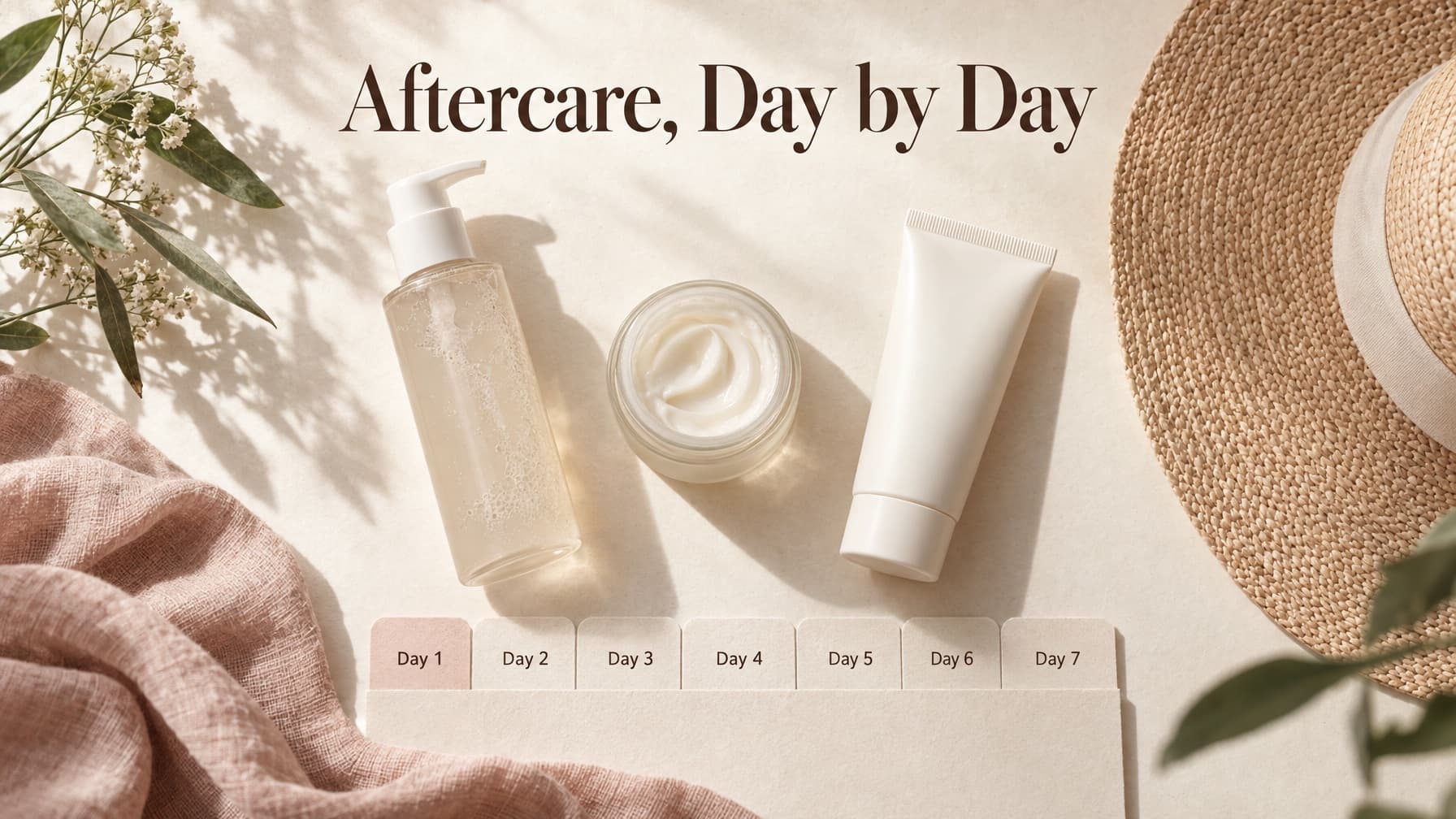
After a Chemical Peel: Day by Day
How much your skin peels, and for how long, depends on the peel. The AAD says that after a light peel the skin stays red for 1 to 7 days, and scaling may follow for 3 to 7 days once the redness fades; after a medium peel the skin is red and swollen, and it crusts and peels off over 7 to 14 days. Here's how to handle it:
- While it's red: The AAD describes skin after a light peel as red, with scaling that can follow once the redness fades. Cleanse the way your provider tells you to, and use the lotion or cream they recommend until the skin heals. Ask when you can wear makeup; after a light peel the AAD says it is usually right away, sometimes the next day.
- When it flakes: Do not pick, peel, or scrub the skin, even if a piece looks ready to come off. The AAD warns that rubbing or scratching skin treated with a chemical peel can cause an infection. Let it shed on its own.
- Until it heals: Ask your provider when to go back to your usual cleanser. Keep using the moisturizer they recommend; the AAD's advice is to "use the moisturizer as directed to keep your skin moist and supple."
Sun protection is part of every peel's aftercare in the AAD's guidance: daily sunscreen once a light peel heals, and total sun avoidance until the skin heals after a medium peel. For sunscreen in general, the AAD recommends an SPF of at least 30, reapplied about every two hours when you're outdoors, and notes that up to 80% of the sun's UV rays can get through clouds, so an overcast San Francisco day still counts. Ask your provider which sunscreen suits your healing skin.
Ask your provider when you can go back to retinoids, vitamin C serums and exfoliating acids, and don't restart them before they say so; the timing depends on the peel and on your skin.
A pared-back routine: gentle cleanser, plain moisturizer and sunscreen, as your provider recommends.
After Microneedling: Managing the First Week
Microneedling uses tiny needles to make controlled punctures in the skin, which the AAD says stimulates your body to make collagen. Right afterward, the AAD says, treated skin may look red and feel like it's sunburned, with minor discomfort, burning or swelling; these reactions usually disappear in a few days to a week.
- Day 1: Avoid touching your face with unwashed hands. Apply only the products your provider recommends; the AAD notes a dermatologist may recommend a post-treatment aftercare cream. The AAD advises waiting 24 hours before applying makeup.
- Days 2-7: Redness and the sunburned feeling usually disappear within this window, per the AAD. Keep protecting your skin from the sun, and ask your provider what else to avoid, such as workouts or hot showers, and for how long.
- After the first week: Wait for your provider's clearance before adding back acids or retinoids.
The AAD says following your dermatologist's aftercare instructions helps you avoid infection. Stick to what your provider recommends, and don't add extra serums to "boost" results unless they say so.
The AAD also says to protect treated skin from the sun. For a full breakdown of what results to expect week by week, see our microneedling recovery and results guide, which covers the collagen-building timeline in more detail.
After IPL: Why the Rules Are Different
IPL (Intense Pulsed Light) works differently from peels and microneedling. UT Southwestern Medical Center describes it as emitting multiple wavelengths that target melanin and hemoglobin, treating pigment and vascular imperfections rather than exfoliating the skin or making micro-channels. So the aftercare is less about managing peeling and more about sun protection while treated pigment surfaces and fades.
Right after treatment, UT Southwestern says some patients have redness and slight swelling that typically lasts a few hours, and that pigmented areas may darken before they flake off over the next few days. Baylor College of Medicine says treated skin usually stays red for one to three days, there may be a little bruising, and treated brown spots usually flake off within five to seven days. Don't pick at these spots; let them come off on their own.
- Days 1-3: Ask your provider whether to use a cool compress, and how long to avoid heat such as hot showers, saunas and hard workouts.
- Days 2-7: Darkened spots surface and flake; Baylor puts it at five to seven days. Moisturize as your provider advises and don't exfoliate them off.
- Ongoing: UT Southwestern and Baylor both say to avoid the sun after treatment, and UT Southwestern says to use sunscreen with an SPF of at least 30 during recovery. Neither gives a fixed number of weeks, so ask your provider how long to keep it up.
Baylor advises avoiding the sun before and after treatment and notes that having a tan interferes with the treatment. If you spend a lot of time outdoors, plan your IPL sessions for a stretch when you can realistically stay out of direct sun. For a full cost and results breakdown, our IPL photofacial guide covers what to expect across a full treatment series.

Whatever the treatment, follow your provider's aftercare; actives can wait until they say so.
What to Confirm With Your Provider After Any Treatment
Regardless of which treatment you had, a handful of habits come up across the board. Treat them as a checklist to confirm with your provider, whose instructions come first:
- Sunscreen, every day. The AAD recommends SPF 30 or higher, reapplied about every two hours when you're outdoors or after swimming or sweating, and notes that sunscreens with zinc oxide or titanium dioxide may cause less irritation to sensitive skin. Ask your provider how long your treated skin needs extra protection.
- Hands off. Don't pick, peel, scratch, or scrub healing skin. The AAD warns that rubbing or scratching skin treated with a chemical peel can cause an infection.
- Simplify your routine. Drop retinoids, vitamin C, exfoliating acids, and fragranced products until your provider clears you to reintroduce them; the timing depends on the treatment.
- Moisturize as directed. Use the moisturizer your provider recommends, as often as they tell you. This isn't the week to experiment with new products.
- Ask before the gym. None of the sources quoted here sets a fixed wait for exercise, so ask your provider when you can work out and sweat again.
- Ask about heat. Likewise, ask whether to avoid hot showers, saunas and steam rooms, and for how long.
If you notice unusual symptoms, excessive swelling, pus, fever, or pain that gets worse instead of better, contact your provider right away. Normal healing trends in one direction: improvement. Anything trending the other way needs a professional look.
Booking your treatment with an experienced provider matters here too. A good esthetician sends you home with written aftercare instructions and product recommendations specific to your skin and the depth of treatment you received. If you're weighing your options, browse our full treatment menu to see which service fits your skin goals and downtime tolerance before booking.
FAQ: Chemical Peel Aftercare
How long should I wait to wear makeup after a chemical peel or microneedling?
The AAD says makeup can usually go on immediately after a light chemical peel, sometimes the next day, and that after a medium peel you can wear camouflaging makeup after 5 to 7 days. After microneedling, the AAD advises waiting 24 hours before applying makeup. Your provider's instructions for your treatment come first.
Is redness after IPL or microneedling normal, and how long does it last?
Some redness is expected. The AAD says redness and a sunburned feeling after microneedling usually disappear in a few days to a week. For IPL, UT Southwestern says redness and slight swelling typically last a few hours, and Baylor College of Medicine says treated skin usually stays red for one to three days. If redness is severe, spreads beyond the treated area, or isn't improving, contact your provider.
Do I really need sunscreen if I'm mostly indoors after treatment?
Yes. The AAD says up to 80% of the sun's UV rays can get through clouds and that UVA rays can pass through window glass. The AAD's peel guidance calls for daily sunscreen after a light peel heals and total sun avoidance until a medium peel heals, so ask your provider how long your treated skin needs extra protection.
When can I exfoliate after IPL?
Not until the treated spots have finished flaking on their own; Baylor College of Medicine says treated brown spots usually flake off within five to seven days. Ask your provider when acids or retinol can go back in. Until then: moisturizer and sun protection as your provider recommends.