
Microneedling With Growth Factors: What It Adds
What growth factor serums do during microneedling, what the trials actually show, how exosomes differ, and what a session costs in Union Square.
Does a growth factor serum make microneedling work better? Possibly, but the research cannot yet say how much the growth factors themselves add. Growth factors are signaling proteins that tell skin cells to multiply and build collagen; applied during microneedling, they reach skin through the channels the needles open. The best-known randomized trial of that combination had twenty patients, and its growth factor group also used a multi-ingredient serum and a twice-daily home regimen. Here is what it and the wider research show, how exosomes differ, and what a session costs at Aesthetic OOGII.
What growth factors are
Growth factors are proteins cells use to signal each other — to divide, to migrate into a wound, to lay down new collagen and the other structural material around them. Skin makes its own. Cosmetic serums supply them from outside, often derived from human cells grown in a lab.
A 2023 systematic review in the Journal of Cosmetic Dermatology (Quinlan, Ghanem and Hassan) catalogued what these products contain. TGF-β1 and EGF were the most common, followed by VEGF, IGF-1, bFGF and HGF. Many products are "conditioned media": the fluid human cells — often fibroblasts, the skin's collagen-making cells — were grown in, which carries a mix of growth factors and other signaling molecules rather than one purified protein. The proposed mechanism is the same across them: encourage dermal fibroblasts to proliferate and to build extracellular matrix, the scaffolding that makes skin firm and smooth.
Why pair them with microneedling
Microneedling creates many small, controlled punctures that set off the skin's wound-repair response, including new collagen. The American Academy of Dermatology lists acne scars, large pores, fine lines and wrinkles, uneven texture and tone, stretch marks and other scars among what it can improve, and describes downtime as minimal: redness or darkening that usually clears within a few days to a week.
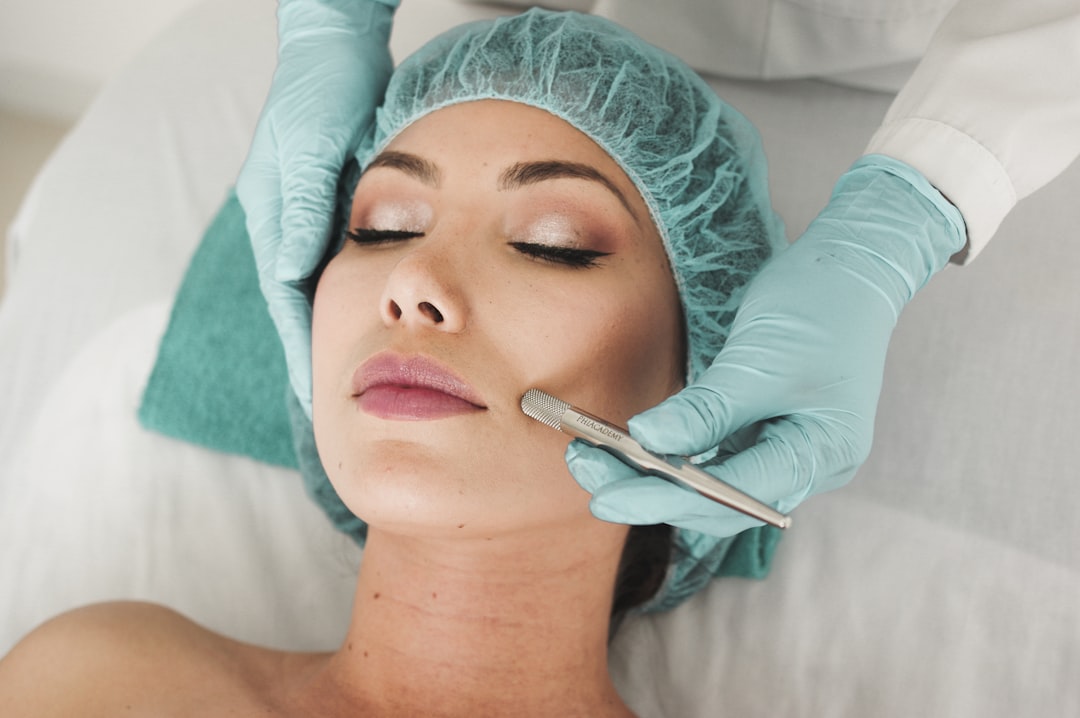
The logic of adding a serum is delivery: the channels a needle makes are a temporary way in. A 2024 review of microneedling in Cureus (Jaiswal and Jawade) describes combining it with platelet-rich plasma or topical serums as allowing deeper penetration of those agents and improving results for texture and tone. That is the idea behind pairing the two, and behind the studio's menu item, Microneedle Treatments with skin growth Factors.
What the evidence actually shows
This is the part most product pages skip. The research is real, but it is thin, and it is worth knowing exactly how thin before paying for it.
The direct trial. In a randomized controlled trial published in the Journal of Clinical and Aesthetic Dermatology in 2020 (Merati and colleagues), twenty women aged 35 to 60 had four microneedling sessions a month apart. Ten had hyaluronic acid gel applied during the procedure. The other ten had a "polygrowth factor" serum that contained recombinant growth factors alongside other actives — among them retinol, a vitamin C derivative, alpha lipoic acid and plant extracts — and they also used the same maker's serum and "Accelerator" morning and night between treatments. Both groups improved. The growth factor group did better on skin texture in imaging and reported more improvement in smoothness and hydration; the hyaluronic acid group's gains were more in tone and pigmentation. The authors concluded the combination was safe and effective for several skin measures — and listed their own limitations: a small number of subjects, mostly subjective assessments, and a very shallow 0.5 mm needle depth.
Because that group got a multi-ingredient serum plus a home regimen, the trial tested the whole package. It cannot tell you what an unspecified growth factor serum applied only during an in-office session adds on its own.
The wider topical evidence. The 2023 Journal of Cosmetic Dermatology review pulled together 33 studies with 1,180 participants — 9 randomized trials and 24 uncontrolled case series — of growth factor products applied to the face, mostly twice a day for about three months without needling. Investigators reported modest improvement from baseline: a median of under 50 percent for texture, under 35 percent for fine lines and wrinkles, and under 20 percent for overall appearance. Participants rated their results higher than investigators did. The three randomized trials that compared one product with another found no significant difference between them, and whether the effect lasts beyond six months is unknown. Side effects were minimal.
What that adds up to. Growth factor products look safe in these studies, and regimens that include them have been associated with modest improvement, most consistently in texture. The evidence does not show large effects, does not isolate what the growth factors add during microneedling, does not show one source or brand beating another, and mostly comes from small or uncontrolled studies. Treat the serum as a plausible extra to the microneedling itself, not a proven multiplier.
One comparison is worth keeping straight. The most-quoted number for microneedling and acne scars — the AAD's 50 to 70 percent fading of acne scars in studies, over three to five treatments two to four weeks apart — is for microneedling combined with platelet-rich plasma, made from your own blood. The studio's menu item uses skin growth factors, not PRP, so that figure should not be borrowed for it.
Growth factors vs exosomes
Exosomes are the newer name in the same conversation, and the two are often compared as if they were rival upgrades. They are different things:
- What they are. A 2024 review in Skin Health and Disease (Bai and colleagues) defines exosomes as nano-sized vesicles, roughly 40 to 160 nanometers, released by cells and carrying proteins, lipids, nucleic acids and metabolites between them. Growth factors are individual proteins; an exosome is a tiny package that may carry some of them along with much else.
- How much evidence exists. That review found only four prospective clinical trials in people for cosmetic uses, all for skin rejuvenation, with 16 to 56 participants each, and concluded that the scarcity of clinical evidence does not yet justify widespread use in cosmetic dermatology. It also noted there are no established standards for how exosomes are sourced or prepared, and that the sources in commercial products are vaguely defined.
- Regulatory status. The FDA's public safety notification on exosome products (December 2019) states that there are currently no FDA-approved exosome products, that exosomes used to treat diseases and conditions in humans are regulated as drugs and biological products, and it reported serious adverse events in patients treated with unapproved products marketed as containing exosomes. A 2020 FDA consumer alert repeated that no exosome products are FDA-approved.
None of that means an exosome serum used in a facial is dangerous by default; the FDA notices address products used to treat diseases and conditions, and the cosmetic question is less settled. It does mean the evidence for exosomes is thinner than for growth factors, which is already modest. The studio's menu lists skin growth factors with microneedling; it does not list exosomes.
What it costs here, and what to ask
- Microneedle Treatments with skin growth Factors — $300, 60 minutes.
- Three-session package — $700 ($200 less than three single sessions).
The menu describes the treatment as using a device with small needles to create micro-injuries in the skin, stimulating collagen production and improving texture and tone. It does not name the growth factor product, so ask at the complimentary consultation what is being applied and where it is derived from — the questions the research above suggests are worth asking anywhere. Series packages must be redeemed within a calendar year and are non-refundable. The microneedling page covers recovery week by week and how many sessions a course usually takes; for pitted scarring specifically, see the acne scar page.
Who should wait
A 2016 review in the Indian Dermatology Online Journal (Singh and Yadav) lists active acne as a contraindication for microneedling, alongside cold sores or other local infections such as warts, moderate to severe chronic skin disease such as eczema or psoriasis, bleeding disorders or anticoagulant therapy, a strong tendency to keloid scarring, and chemotherapy or radiotherapy. The 2024 Cureus review adds pregnancy, since safety during pregnancy has not been established. If you are breaking out, the acne treatment comes first; microneedling waits until the skin has calmed down.
Skin tone is less of a barrier than with light-based treatments. The AAD describes microneedling as safe for all skin tones, and a 2026 review of cosmetic treatments for Fitzpatrick IV–VI skin calls it generally very safe for those skin types. Temporary darkening after treatment can still happen, so sun protection afterward matters.
FAQ: microneedling with growth factors
Do growth factors make microneedling more effective?
Unclear. A 20-person randomized trial found that microneedling with a multi-ingredient growth factor serum, plus a twice-daily home regimen, improved texture more than microneedling with hyaluronic acid — but because of the extra ingredients and home products, it could not isolate the growth factors' contribution. A 2023 review of topical growth factors found modest gains. Treat growth factors as a plausible addition rather than a proven multiplier.
Are exosomes better than growth factors?
There is no good evidence either way. Exosomes have less clinical research behind them than growth factors, no agreed standards for sourcing or preparation, and no FDA-approved exosome product exists. Aesthetic OOGII's menu lists growth factors, not exosomes.
How much does microneedling with growth factors cost in San Francisco?
At Aesthetic OOGII in Union Square it is $300 for a 60-minute session, or $700 for a three-session package.
Is microneedling with growth factors the same as PRP microneedling?
No. PRP is made from your own blood; growth factor serums are prepared products. The widely quoted acne-scar results from the AAD refer to microneedling with PRP, which is not on the studio's menu.
Can I have microneedling with active acne?
No. Active acne is a listed contraindication. Settle the breakouts first, then start microneedling.
How long is the downtime?
The AAD describes it as minimal: redness or darkening that usually clears in a few days to a week, and most people return to daily activities straight away.
About the author
Oogii
Certified Medical & Clinical Aesthetician, Aesthetic OOGII
Certified medical and clinical aesthetician, owner of Aesthetic OOGII, a clinical skincare and medical aesthetics practice at 450 Sutter St in downtown San Francisco.