


Marks and scars are not the same thing
The flat marks left where a breakout used to be are colour changes, not scars. Dermatology references describe two common kinds: post-inflammatory hyperpigmentation — brown marks from extra melanin, more common in darker skin — and post-inflammatory erythema — red or pink marks linked to changes in small blood vessels, more common in lighter skin. DermNet notes that these colour changes often improve with time, but that this may take months or longer. Daily sun protection matters while they fade.
True scarring is a change in the skin’s structure. Most acne scars are atrophic — sunken — and come in three main shapes: ice-pick scars (narrow and deep), boxcar scars (wider, with defined edges) and rolling scars (wide, with sloping edges). Less often the skin makes too much collagen and the scar is raised (hypertrophic or keloid). Sunken and raised scars are treated differently, and so are the three sunken types: the American Academy of Dermatology (AAD) notes that ice-pick scars need different treatment than rolling scars.
Which treatment fits which problem
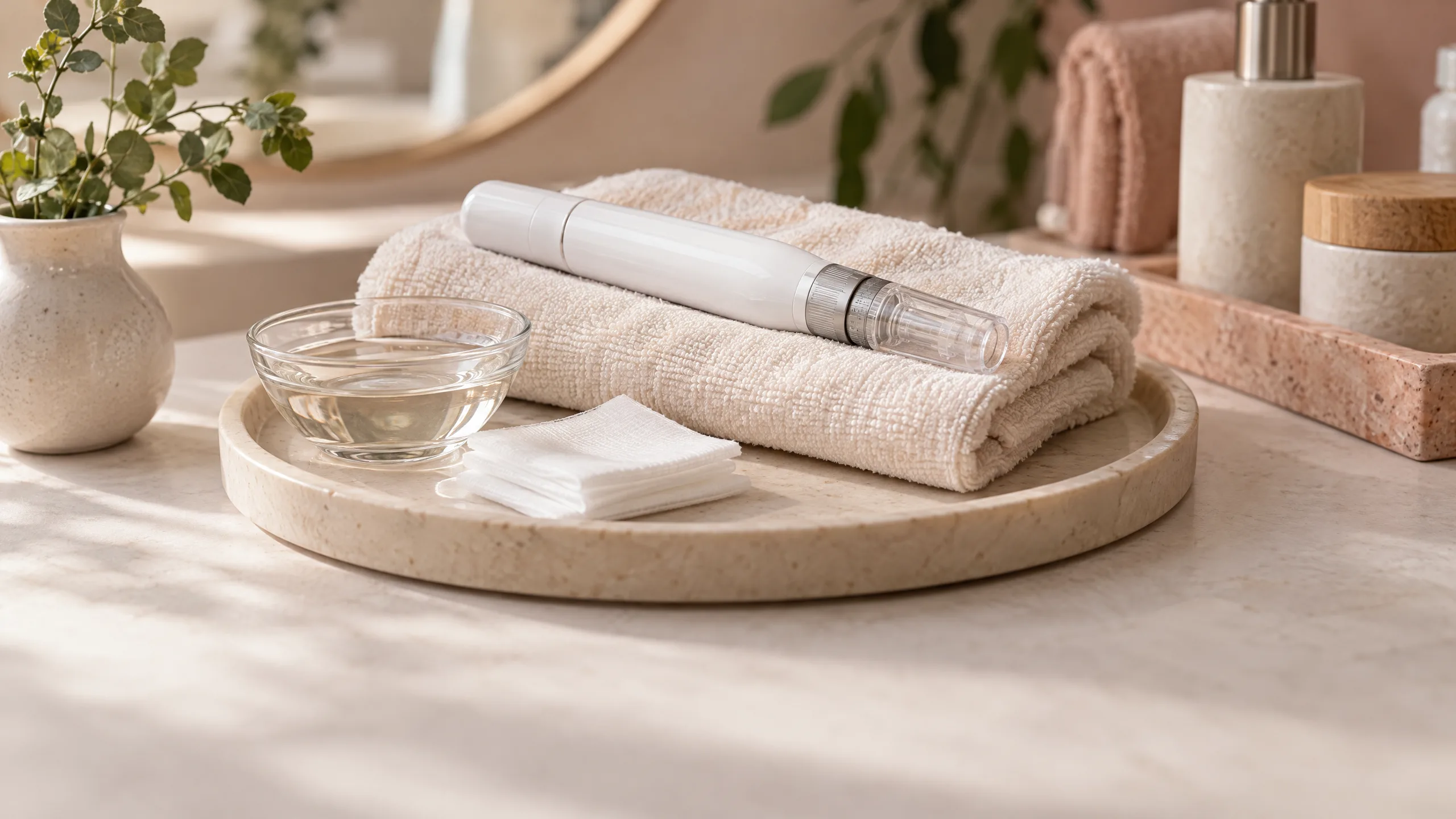
- Microneedling with Skin Growth Factors — $300, 60 minutes, or $700 for a 3-session package. The menu describes it as stimulating collagen production and improving skin texture and tone. Fine needles make tiny punctures, and the skin responds by producing new collagen and elastin — the AAD lists microneedling among the treatments for depressed acne scars and describes it as safe for all skin tones.
- Chemical Peel — $300, 60 minutes. Cleveland Clinic lists uneven skin colouring, certain types of acne and mild scarring among the things peels can improve, and notes that darker skin tones carry a greater risk of post-inflammatory darkening after a peel — one reason the peel chosen depends on your skin.
- IPL Photofacial — $300, 75 minutes, or $650 for three. IPL can target both the red pigment in blood vessels and melanin, according to DermNet, so it is used for redness and for some brown pigment. It carries a risk of darker or paler patches, and UT Southwestern notes that people with darker skin tones (Fitzpatrick IV–VI) or melasma may not be good candidates. Whether it suits your marks and your skin tone is decided at the consultation — see the redness page for more on IPL and red marks.
Why active breakouts have to settle first
The AAD advises waiting on microneedling while you have pimples that are painful, contain pus or go deep into the skin, and its acne-scar guidance says scar treatment typically begins once acne is under control. If breakouts are still frequent, the order is to bring them under control first — for example with clinical acne treatment or with a dermatologist — and then treat the scarring left behind.
Who microneedling suits, and who it doesn’t
It is aimed at people with sunken, textural acne scarring and breakouts that are under control. The AAD lists people who should not have microneedling: anyone who heals slowly or poorly, has or had a keloid, has a weakened immune system, is being treated for skin cancer in the area, or is receiving radiation treatment. It also says to wait while you have a tan, a sunburn or a skin infection, and — if you have taken isotretinoin — until at least one month has passed since your last pill. Your prescriber is the right person to confirm timing for any medication.
For sunken scars, dermatologists also use procedures such as acne scar surgery, fillers and laser resurfacing, and the AAD notes they may combine more than one. Those are not on this menu, so if your scarring is deep or sharply pitted, a dermatologist’s assessment is a sensible first step.
What results and a course look like
Scarring is usually treated as a series rather than a single session. For acne scars, the AAD says you may need 3 to 5 microneedling treatments, performed every 2 to 4 weeks; results appear gradually as the skin produces collagen, with some improvement possible within a few weeks and full results usually taking several months. The number you need depends on your scars, and the plan for your skin is set at the consultation. The AAD reports that studies of this plan found acne scars faded by 50% to 70% — improvement, not erasure — and that results fade over time as the body loses collagen.
Aftercare
After microneedling the AAD says you may see redness (lighter skin) or darker shading (darker skin), and the skin may feel sunburned, with minor discomfort, burning or swelling; these reactions usually disappear in a few days to a week. Most people can return to work or school straight after. Follow the aftercare instructions you are given, and protect the treated skin from the sun. Pigmented spots treated with IPL may darken before they flake off over the next few days, and UT Southwestern recommends avoiding the sun and using SPF 30 or higher during recovery.
How to book
Aesthetic OOGII is at 450 Sutter St #1530, San Francisco. Oogii is a certified medical and clinical aesthetician. You can book from the treatment menu or call (415) 757-0265. The studio asks clients to mention any health conditions, allergies, injuries or recent medical procedures when booking, and to arrive five minutes early. Cancellations need 24 hours’ notice, and series packages are redeemed within a calendar year — details are on the policy page.