
Deep Cleansing Facial SF: What to Expect & Benefits
What a deep cleansing facial includes, why pores clog, who it suits, how it compares with other treatments, and what it costs at Aesthetic OOGII in SF.
What Is a Deep Cleansing Facial?
A deep cleansing facial is a professional facial built around clearing congested pores: the skin is cleansed and exfoliated, and clogged pores are extracted. At Aesthetic OOGII the Deep Cleansing Treatment is a 60-minute session for $150, and the studio's menu describes it as "an excellent introductory service suited for all skin types" that includes skin analysis, cleansing, exfoliation and extractions.
That makes it a different treatment from a HydraFacial, which uses a device: Hydrafacial lists steps including gentle suction, exfoliation, a gentle peel, extraction and serum infusion (Hydrafacial). If congestion is the main thing you want handled, the blackhead removal page lays out the options at the studio and what each costs.
This guide covers what the session involves, why pores clog in the first place, who the treatment suits, how it compares with other treatments on the menu, and what it costs.
What Happens During the Deep Cleansing Treatment
The studio's menu lists four parts to the Deep Cleansing Treatment:
- Skin analysis
- Cleansing
- Exfoliation
- Extractions
The menu also lists a separate Skin Analysis/Deep Cleansing service (60 minutes, $175). The studio's policy page says: "Every client is offered a complimentary consultation with Oogii. Our consultations include an assessment about your skin to recommend best course for treatment." If you are not sure which to book, start there. The policy also says some treatments and products are not recommended for certain clients, and asks clients to advise the studio at booking of "any health conditions, allergies, injuries, recent medical procedures, or special needs which may affect your services."
The menu does not list the products used or say whether a mask or steam is part of the session, so ask at the consultation. What to expect afterward is worth asking too.
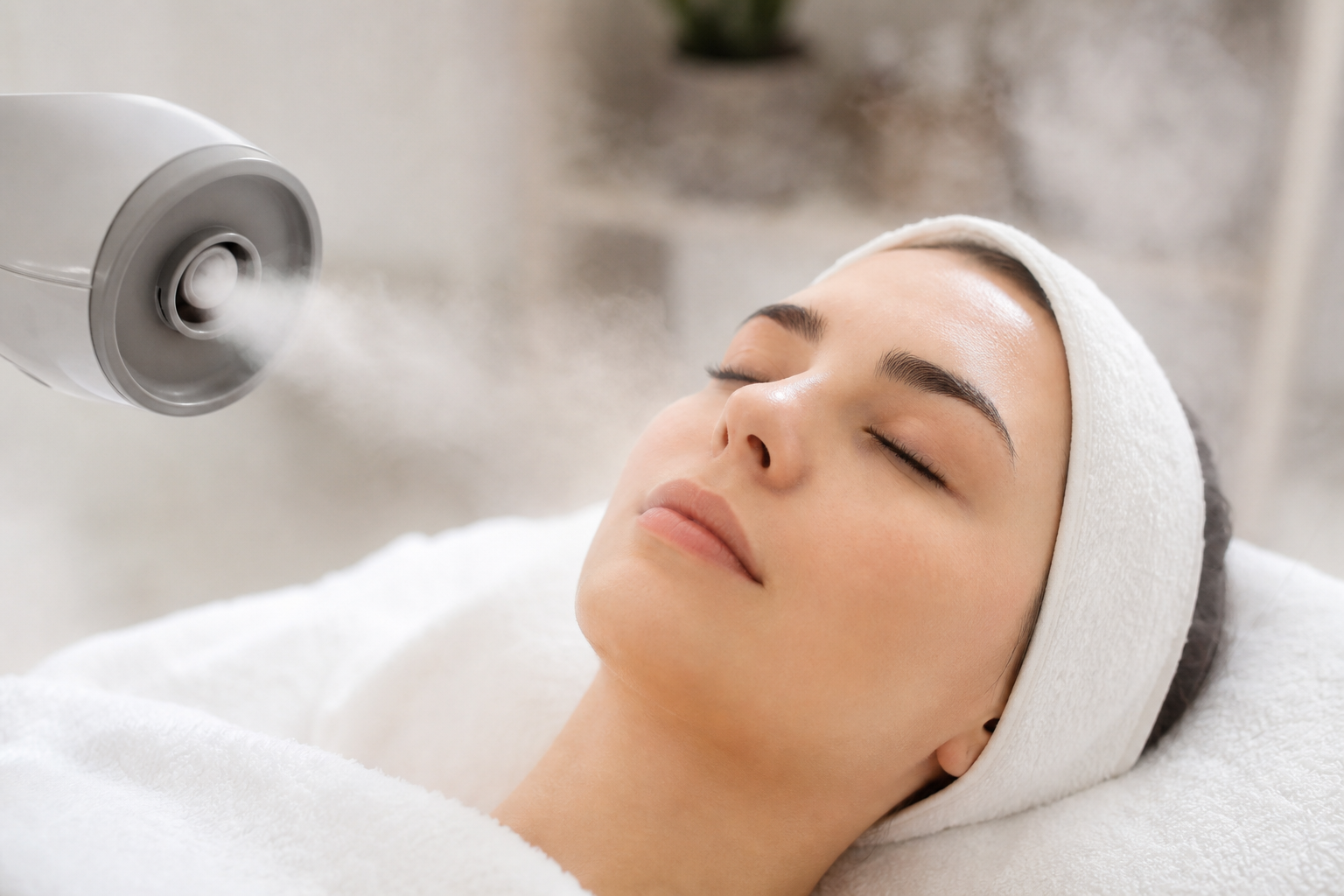
A facial steamer in use, shown for illustration.
Why Pores Clog: Blackheads and Whiteheads
Both blackheads and whiteheads are plugged hair follicles. NIAMS (the National Institute of Arthritis and Musculoskeletal and Skin Diseases) defines whiteheads as plugged follicles that stay beneath the skin and produce a white bump, and blackheads as plugged follicles that reach the surface and open up. Blackheads look black "because the air discolors the sebum, not because they are dirty." MedlinePlus describes the plug as a mixture of oil and skin cells.
That matters for what a facial can and can't do. Extraction clears plugs that are there now. It does not stop the skin from producing oil or shedding cells, so pores can clog again, and daily care between visits is what keeps them clearer. The American Academy of Dermatology lists retinoids as working "to clear your pores" and treating blackheads and whiteheads, and salicylic acid as opening clogged pores and exfoliating the skin.
Not every bump is a clogged pore. NIAMS describes papules (small, pink, sometimes tender bumps), pustules, nodules ("large, painful solid lesions that are lodged deep within the skin") and cysts ("deep, painful, pus-filled lesions"). For large, painful breakouts and severe nodular acne, the AAD describes prescription treatments from a dermatologist, covered in the next section.
Who Benefits Most, and Who Should See a Dermatologist First
The treatment is aimed at congestion: visible blackheads, whiteheads and clogged pores. The menu presents it as an introductory service suited to all skin types, which makes it a reasonable first booking if you have never had a professional facial.
Some skin needs a doctor first, or alongside:
- Deep, painful breakouts. For large, painful breakouts the AAD describes corticosteroid injections, and for nodular acne that has not responded to other treatment it describes isotretinoin. Both are prescription treatments.
- Breakouts that keep coming. If breakouts continue after following good daily care, the AAD recommends a board-certified dermatologist.
- Isotretinoin (Accutane). MedlinePlus advises avoiding waxing, laser skin treatments and dermabrasion while taking it and for 6 months after, because scarring is more likely. Tell the studio if you take it, and ask your prescriber which facial treatments are appropriate.
If acne is part of the picture alongside congestion, the studio's acne treatment ($210, 75 minutes) is the more direct option; its packages add blue light therapy, a chemical peel and CO2 cryotherapy, according to the menu.
Professional Extraction vs. Squeezing at Home
Medical sources advise against squeezing blemishes yourself. MedlinePlus says: "Try not to aggressively squeeze, scratch, pick, or rub the pimples. This can lead to skin infections, slower healing, and scarring." The AAD says picking, popping or squeezing acne "will make the acne take longer to clear and increase your risk for scarring," and NIAMS lists squeezing or picking at blemishes, and scrubbing too hard, as things that can make acne worse.
The AAD uses "acne extraction" for a form of acne surgery in which a dermatologist physically removes acne breakouts, and says that "to avoid scarring and infection, this surgery should only be performed by a board-certified doctor who is trained and skilled in performing acne surgery." The extractions in a facial are a cosmetic step for blackheads and whiteheads: a flier from the California Board of Barbering and Cosmetology lists "extractions (not using needles)" within a licensed esthetician's scope. Inflamed or painful breakouts are a reason to see a dermatologist rather than to have them extracted at a facial.
Illustrative photo.
Looking After Your Skin Between Visits
Ask at your appointment what to do in the first day or two after your facial. For the weeks between visits, the AAD's everyday advice for acne-prone skin applies:
- Gently wash your face up to twice daily and after sweating, with a gentle, non-abrasive cleanser.
- Apply cleanser with your fingertips; washcloths, sponges and other scrubbing tools can irritate the skin.
- Look for a sunscreen labeled "non-comedogenic" or "won't clog pores."
- Stay out of the sun and tanning beds; the AAD notes tanning damages the skin and can worsen acne.
- Give any treatment time to work: it may take several weeks to a few months before you see a difference.
MedlinePlus adds removing makeup before bed and keeping your hands off your face.
How Deep Cleansing Compares to Other Treatments
Deep cleansing vs. HydraFacial: they work by different methods. The deep cleansing facial's listed steps are skin analysis, cleansing, exfoliation and extractions; the HydraFacial uses a device whose steps, per the manufacturer, include gentle suction, exfoliation, extraction and serum infusion. The studio's menu says HydraFacial requires no downtime and can address acne, fine lines and wrinkles, hyperpigmentation and dry skin. A single HydraFacial session is $325, against $150 for deep cleansing.
Deep cleansing vs. chemical peel: a chemical peel applies a chemical solution so the top layer of skin peels off. The AAD says a peel applied to acne helps remove the dead skin cells and excess oil clogging pores, and Cleveland Clinic lists sun spots, uneven skin coloring, rough skin and dull complexion among what peels help (Cleveland Clinic). Peels come with healing time: 1 to 7 days for a light peel, per the AAD. A peel at the studio is $300.
Deep cleansing vs. microneedling: microneedling uses thin needles to make tiny holes in the top layer of the skin, stimulating collagen and elastin. Cleveland Clinic lists acne scars, wrinkles and enlarged pores among the concerns it addresses, and says to discuss it with your provider first if you have acne or take acne medication (Cleveland Clinic). It is a texture treatment, not an extraction one. A session at the studio is $300.
Deep Cleansing Treatment Pricing at Aesthetic OOGII
At Aesthetic OOGII in San Francisco, the Deep Cleansing Treatment is $150 for a 60-minute session. The Skin Analysis/Deep Cleansing service is $175 for 60 minutes. The 6-session Deep Cleansing package is $650, about $108 per visit.
A package makes sense if you expect to come back, because a single session clears what has built up now while pores keep producing oil. Under the studio's policy, series packages must be redeemed within a calendar year, and packages are non-refundable, so settle the plan at your consultation first. Acne treatment runs $210 per session, $525 for three or $925 for six.
The studio is at 450 Sutter St #1530 in downtown San Francisco, open Monday to Friday 9:30 am to 6:00 pm and Saturday 9:30 am to 4:30 pm.
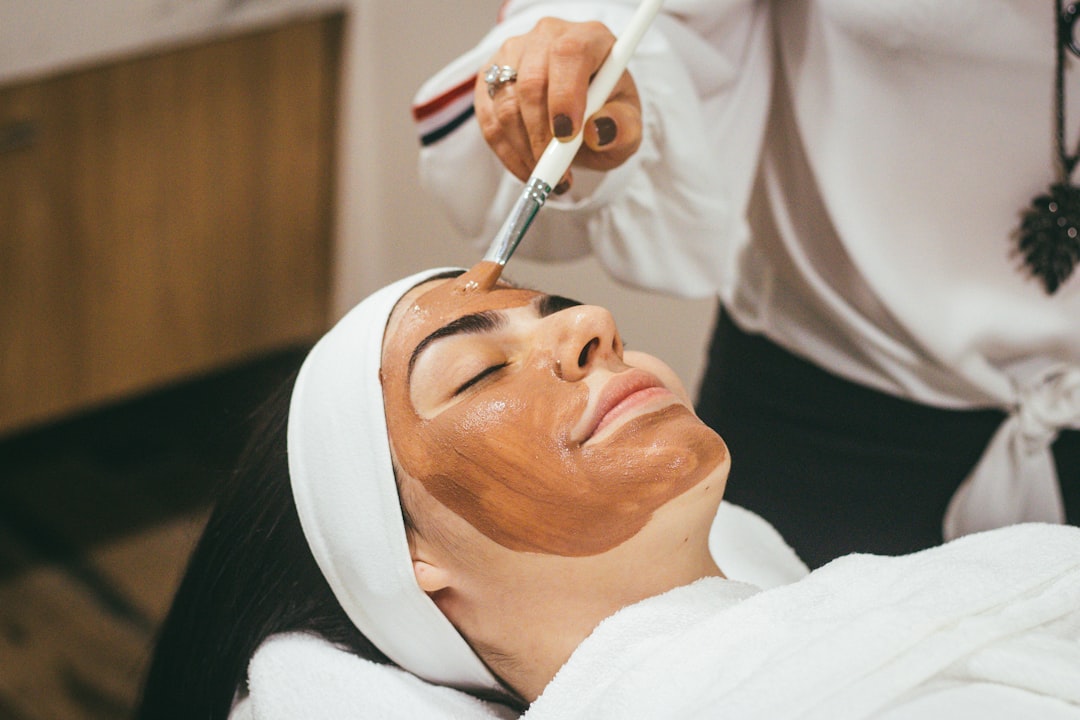
A face mask being applied, shown for illustration.
FAQ: Deep Cleansing Facials and Blackheads
What does the Deep Cleansing Treatment include?
The studio's menu lists skin analysis, cleansing, exfoliation and extractions. It is a 60-minute session for $150 and is described as an introductory service suited to all skin types.
How much does a deep cleansing facial cost at Aesthetic OOGII?
$150 for a single 60-minute session, or $175 for the 60-minute Skin Analysis/Deep Cleansing. A 6-session package is $650, about $108 per visit, and must be redeemed within a calendar year.
Can I get a deep cleansing facial if I have active acne?
Mention it at your complimentary consultation. For large, painful breakouts and severe nodular acne, the AAD describes prescription treatments from a dermatologist, such as corticosteroid injections and isotretinoin. For breakouts, the studio's acne treatment ($210, 75 minutes) is the more direct option.
Why do blackheads come back after a facial?
Because the skin keeps producing oil and shedding cells. Extraction clears the plugs that are there; it does not stop new ones forming. The AAD says retinoids work to clear pores and treat blackheads and whiteheads, and salicylic acid opens clogged pores.
Why are blackheads dark?
According to NIAMS, a blackhead is a plugged follicle that has opened at the skin's surface, and it looks black because the air discolors the sebum, not because it is dirty.
Can I extract blackheads myself at home?
Medical sources advise against it. MedlinePlus says aggressive squeezing, scratching, picking or rubbing can lead to skin infections, slower healing and scarring, and the AAD says picking or squeezing makes acne take longer to clear and increases the risk of scarring.
Can I book a facial while taking isotretinoin?
Tell the studio first. MedlinePlus advises avoiding waxing, laser skin treatments and dermabrasion while taking isotretinoin and for 6 months after, because scarring is more likely; ask your prescriber which facial treatments are appropriate.
About the author
Oogii
Certified Medical & Clinical Aesthetician, Aesthetic OOGII
Certified medical and clinical aesthetician, owner of Aesthetic OOGII, a clinical skincare and medical aesthetics practice at 450 Sutter St in downtown San Francisco.