Understanding Eczema Before You Choose a Treatment Path
Eczema (atopic dermatitis) isn't just dry skin, it's a chronic condition where the skin barrier fails to hold moisture and keep out irritants. This leads to red, itchy, sometimes cracked patches that flare and calm down in cycles.
There's no single fix for eczema because triggers vary person to person. The National Eczema Association lists wool and synthetic fabrics, fragrance, stress, and changing temperatures, humidity and seasons among common triggers, and Cleveland Clinic adds soaps, detergents and dry, low-humidity weather. That's why care usually has two parts: medical treatment directed by a dermatologist or other clinician, and at-home management you do daily. The American Academy of Dermatology notes that the condition cannot be cured, but proper treatment can control it, and that dermatologists recommend moisturizer for everyone with atopic dermatitis.
Before picking a path, it helps to know what you're actually dealing with. How severe your eczema is, and what treatment fits it, is a diagnosis for a dermatologist or other medical clinician to make. It's worth getting that assessment early: the AAD notes that long-term scratching can change the skin's texture and appearance, and that dry, cracked, scratched skin is more susceptible to infection.
Clinical Eczema Treatments Available in San Francisco
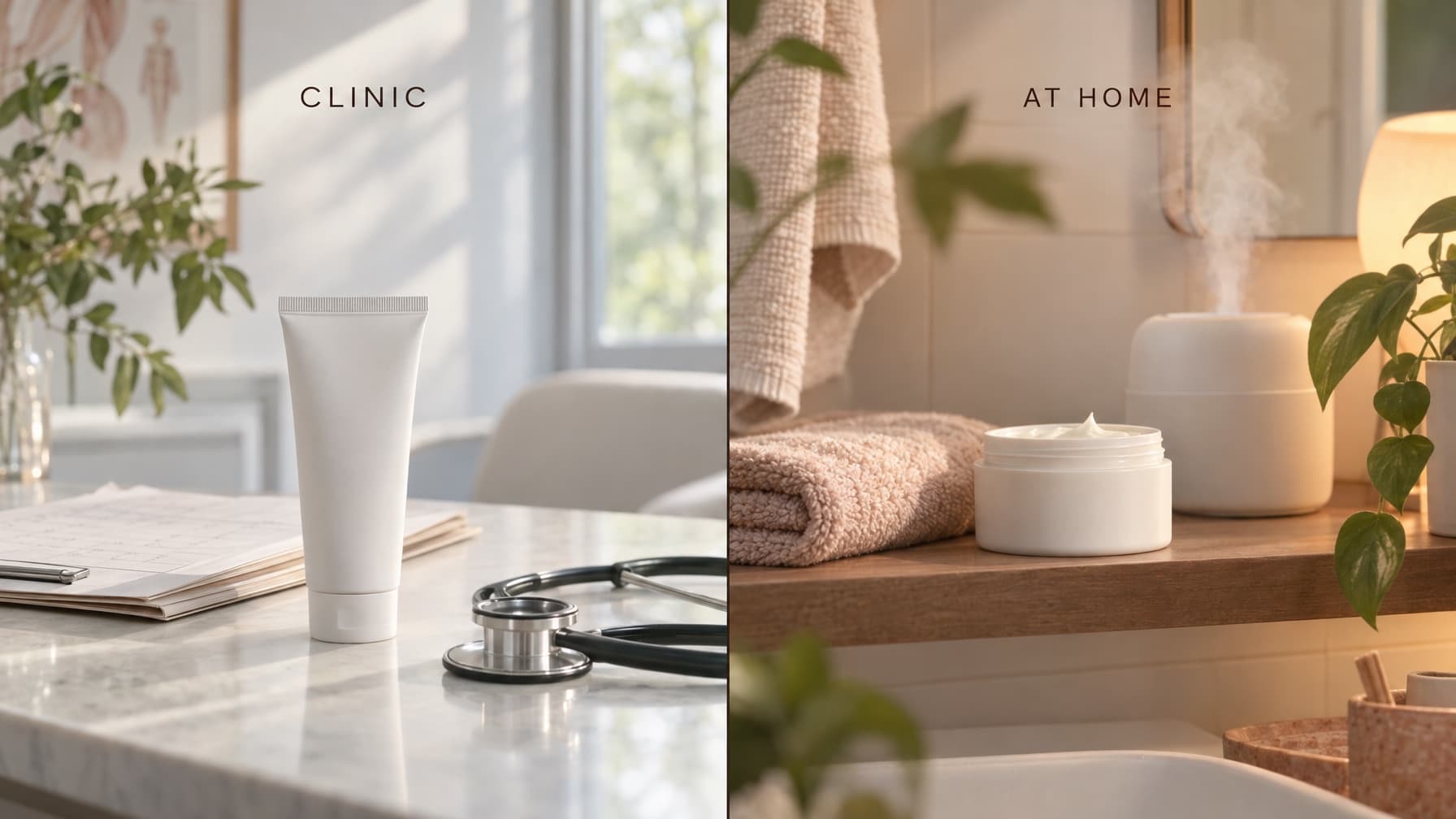
When at-home care isn't enough, a dermatologist has several medical options. These are the ones the AAD and the National Eczema Association describe; which one suits you is your clinician's call:
- Prescription topical corticosteroids and calcineurin inhibitors: The AAD says topical corticosteroids can quickly relieve symptoms, and that calcineurin inhibitors such as pimecrolimus cream and tacrolimus ointment are prescribed when corticosteroids stop working, fail to work or are not a good option. Use them as your prescriber directs.
- Phototherapy: The National Eczema Association describes it for moderate to severe eczema that hasn't responded to topical treatments. The AAD says it often means going to a treatment center 2 to 3 times per week for at least a few months, and the NEA puts a typical trial period at three to six months. Your dermatologist sets the course.
- Biologic injections (like dupilumab): The AAD notes dupilumab is FDA-approved for people 6 months and older with moderate or severe atopic dermatitis that isn't well controlled with medication applied to the skin. Whether it's right for you is decided by a prescribing clinician.
Cosmetic LED light devices are a different thing from medical phototherapy. The phototherapy the AAD and NEA describe is a prescribed ultraviolet treatment given at a treatment center; an LED step in a facial is not a substitute for it.
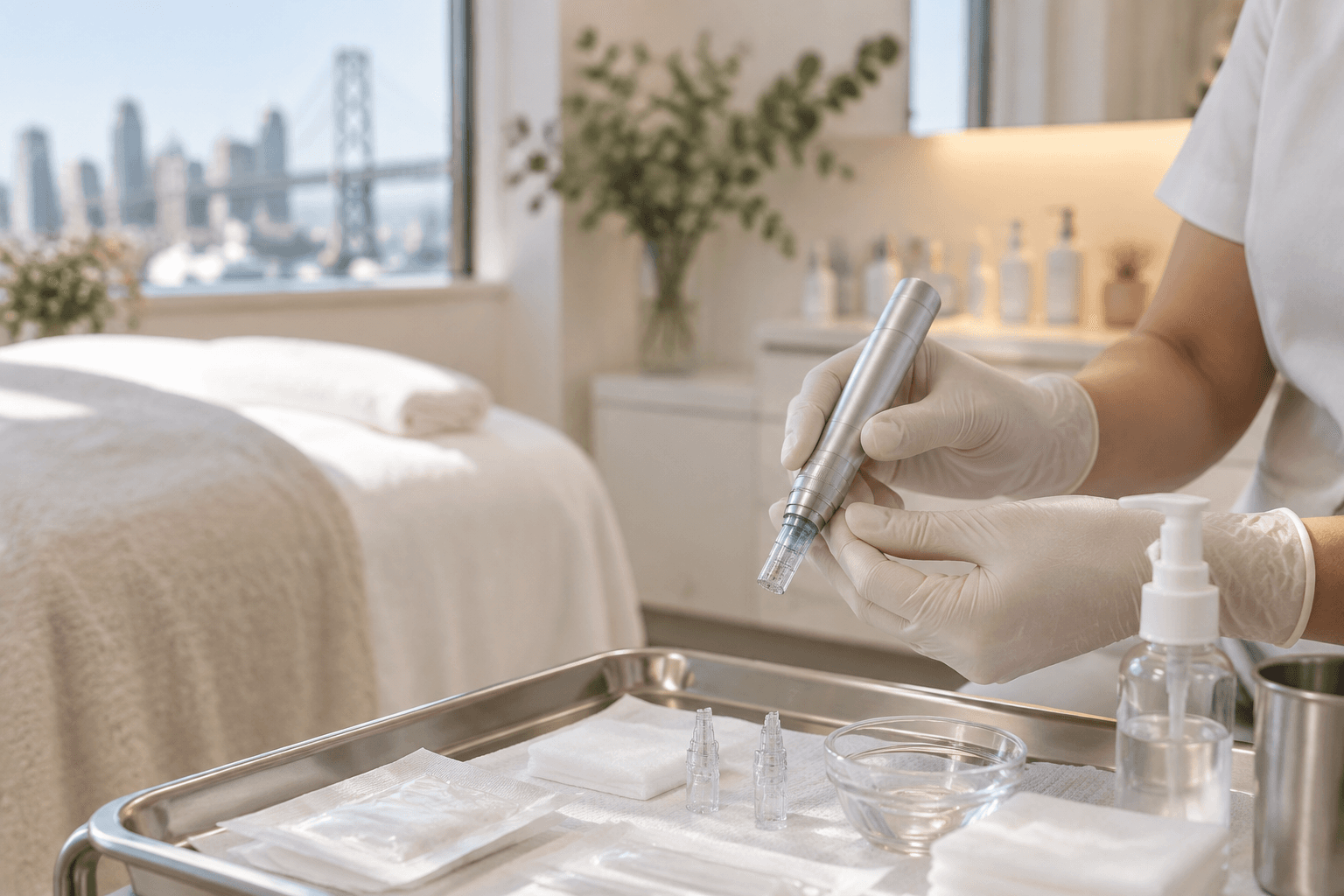
Aesthetic OOGII is a skincare studio run by Oogii, a certified medical and clinical aesthetician; we don't diagnose eczema or prescribe medication for it. What we do offer is an Eczema Treatment ($195, 65 minutes), which our menu describes as including deep cleansing, targeted therapies and LED light therapy, with an Eczema Mask. It is a skincare service, not a medical treatment for eczema. If you're dealing with severe or spreading eczema, see a board-certified dermatologist first.
Tell whoever treats your skin about your eczema before any facial — Photo by karelys Ruiz on Unsplash
At-Home Eczema Management That Actually Works
Daily habits are the part of eczema care you control. The goal is simple: keep the skin hydrated and avoid whatever triggers your own flares. These points come from the National Eczema Association, the AAD and Cleveland Clinic.
- Moisturize within 3 minutes of bathing or showering. The NEA recommends this to lock in moisture. It describes lotions as the lightest moisturizers, creams as very good at sealing in moisture, and ointments as having the highest oil content; ointments work best for many people, and a cream is a good alternative if an ointment feels too greasy.
- Keep baths and showers warm, not hot, and short. Cleveland Clinic advises warm rather than hot water, since long hot baths can dry the skin; the NEA's soak-and-seal method uses a 5 to 10 minute lukewarm soak.
- Choose fragrance-free products. The NEA lists perfumes and other scented products among eczema triggers and advises fragrance-free moisturizers; Cleveland Clinic lists soaps and detergents as triggers too, so check body wash and laundry products as well as skincare.
- Run a humidifier in dry months. The National Eczema Association lists changing seasons, humidity and extreme heat or cold among common eczema triggers. Cleveland Clinic names dry, low-humidity weather as a trigger, so if dry indoor air bothers your skin, a humidifier may help.
- Identify and avoid personal triggers. Keep a simple flare journal for a month, noting stress levels, new products, fabrics worn, and weather.
- Try not to scratch. Easier said than done, but the AAD notes that dry, cracked skin and scratching make the skin more susceptible to infection. Keeping nails short limits the damage when you do scratch.
The AAD notes that dermatologists recommend moisturizer for everyone with atopic dermatitis, and that it helps prevent cracks and fissures, so treat it as routine maintenance rather than something you start only once a flare appears.
When to See a Professional vs. When to Wait It Out
Not every dry patch needs an appointment, but ignoring the wrong signs can let a manageable flare turn into a bigger problem. Here's a rough guide for deciding.
See a dermatologist or other medical provider if: you've never been diagnosed; the skin is cracked, weeping or spreading; itching keeps you up; or, in Cleveland Clinic's words, your symptoms get worse after treatment or don't go away a few weeks after treatment. Get care promptly for possible infection: Cleveland Clinic lists fever and chills, clear to yellow fluid leaking from blisters, and pain and swelling. None of this is spa care.
Consider a gentle skincare appointment only if: your eczema has been diagnosed, your skin is not actively flaring, and your dermatologist has no objection. Every client at Aesthetic OOGII is offered a complimentary consultation with Oogii, which includes a skin assessment, so you can talk through your skin and your medical care before booking anything on the menu.
One more thing worth knowing: eczema and rosacea sometimes get confused because both cause redness, but the treatment approaches are different. The facial redness page walks through the three common causes and which treatment fits each. If you're unsure which you're dealing with, our IPL photofacial page covers a light-based treatment often discussed for redness. Get the diagnosis from a medical provider before choosing any treatment.
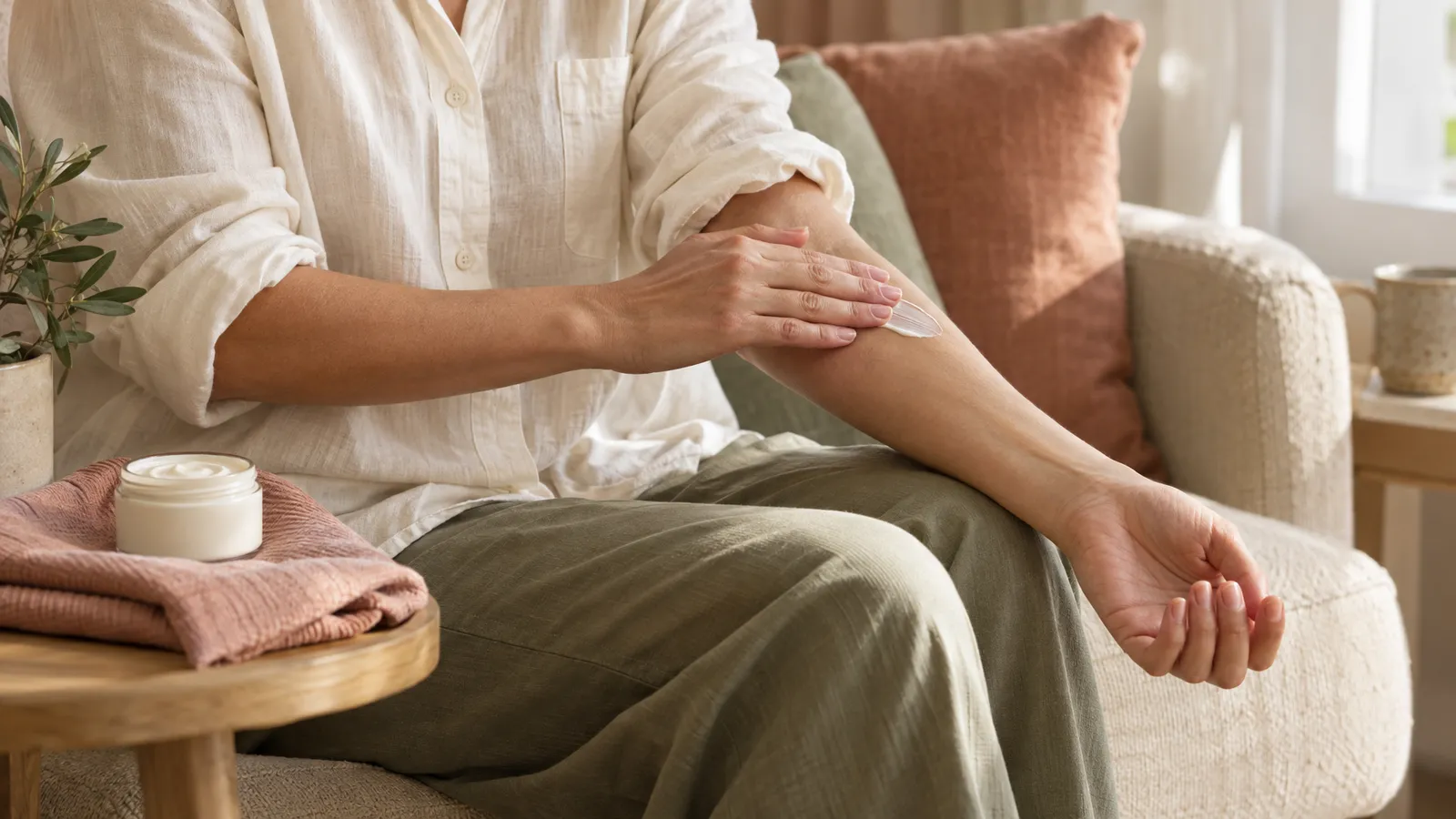
Consistent, fragrance-free moisturizing is the foundation of eczema management between clinical visits — Photo by Kaeme on Unsplash
Building a Combined Treatment Plan That Works Long-Term
Long-term eczema care rarely means picking one approach and sticking to it forever. The AAD describes it as treatment your dermatologist directs plus daily skin care and trigger management. If you also book skincare services, treat them as a separate, optional layer.
Layer one is medical: a dermatologist diagnoses severity, prescribes topicals or other medication if needed, and rules out other conditions that mimic eczema (like psoriasis or contact dermatitis from a specific allergen).
Layer two is daily home care: consistent moisturizing, gentle fragrance-free products, humidity control, and trigger avoidance based on what you've learned about your own skin.
Layer three is optional skincare services: if you enjoy facials, choose ones your dermatologist is comfortable with, tell the aesthetician about your eczema and any products you react to, and skip appointments while you're flaring. Skincare services are not a treatment for eczema and are not a substitute for layers one and two.
Budget-wise, expect prescription treatment costs to vary widely depending on insurance coverage. At Aesthetic OOGII the Eczema Treatment is $195 for a 65-minute session. For other skin goals, our guide on choosing a clinical skin treatment walks through the professional treatments on our menu.
FAQ: Eczema Care in San Francisco
Can eczema be cured completely?
No. The AAD says atopic dermatitis cannot be cured but proper treatment can control it, and Cleveland Clinic notes there isn't a cure for eczema. For children, Cleveland Clinic reports that nearly half outgrow the condition or improve by the time they reach puberty; others manage it long term with medical care and daily habits.
Is it safe to get a facial if I have eczema?
Ask your dermatologist first, because it depends on your skin and your treatment. During an active flare with cracked or weeping skin, skip facials and see a medical provider. If your dermatologist is comfortable with a facial, tell the aesthetician about your eczema and any products you've reacted to before the appointment, and ask what will be used on your skin.
What's the difference between eczema and dry skin?
Eczema is more than dryness: the AAD describes atopic dermatitis as itchy skin that tends to start suddenly and causes a rash, and it tends to flare and calm in cycles. If a "dry patch" keeps itching, forms a rash or keeps coming back, have a medical provider look at it rather than guessing.
Can San Francisco's weather make my eczema worse?
It can. The National Eczema Association lists changing temperatures and seasons, humidity, and extreme heat or cold among common eczema triggers. Whether the weather is one of your own triggers is individual, which is what a flare journal helps you work out.
Are "medical-grade" skincare products better for eczema?
The label itself tells you little. The FDA sorts skincare into cosmetics, drugs, or both, based on a product's intended use, and says the law does not recognize "cosmeceuticals" as a category; "medical-grade" is not one of its categories either. Prescription eczema treatments come from a doctor. For everyday products, whether you buy them in San Francisco or online, the National Eczema Association advises choosing fragrance-free moisturizers, notes that creams and ointments are very good at sealing in moisture, and awards a Seal of Acceptance to products it has vetted against a list of known irritants and allergens.
Should I see a dermatologist or an esthetician first?
A dermatologist, especially if you have an active flare, cracked skin, or you've never been formally diagnosed. An aesthetician does not diagnose or treat eczema; a skincare appointment is something to consider only once your eczema is under medical care and your dermatologist has no objection.
What is the first-line treatment for eczema?
It's a mix of daily skin care and, for flares, a prescription from your clinician. The AAD says dermatologists recommend moisturizer for everyone with atopic dermatitis, and that topical corticosteroids can quickly relieve symptoms. Calcineurin inhibitors such as pimecrolimus cream and tacrolimus ointment are prescribed when corticosteroids stop working, fail to work or aren't a good option. Which one fits you depends on your severity, so it's your dermatologist's call.
If my eczema still flares after months of prescription steroid creams, how do doctors decide whether it is severe enough for a biologic?
That's a decision for your prescribing clinician, and we can't make it for you. What the AAD says is that dupilumab is FDA-approved for people 6 months and older with moderate or severe atopic dermatitis that isn't well controlled with medication applied to the skin. The National Eczema Association describes phototherapy as another step for moderate to severe eczema that hasn't responded to topical treatments. If your flares keep returning despite your prescribed creams, tell your dermatologist, and ask whether the skin is considered well controlled and what the next option would be.
Fragrance-free vs. unscented: what should I look for?
Choose "fragrance-free." The National Eczema Association lists perfumes and other scented products among eczema triggers and advises fragrance-free moisturizers. "Unscented" only tells you a product doesn't smell strongly, and some unscented products can still contain ingredients added to mask the odor of other ingredients, so read the ingredient list rather than relying on the front label. The NEA's Seal of Acceptance marks products it has vetted against a list of known irritants and allergens, which is a useful shortcut. Check body wash and laundry detergent too, since Cleveland Clinic lists soaps and detergents as triggers.
Where can I get a clinical facial in San Francisco?
Aesthetic OOGII is at 450 Sutter St in San Francisco. Our menu lists the clinical facials and skin treatments we offer, and every client is offered a complimentary consultation with Oogii, which includes a skin assessment. If you have eczema, mention it at the consult and get your dermatologist's okay first. Our Eczema Treatment ($195, 65 minutes) is a skincare service, not a medical treatment, and it isn't suitable during an active flare with cracked or weeping skin.
Eczema Treatment: Quick Reference Facts
About 31.6 million people in the U.S. have some form of eczema, according to the National Eczema Association, and 80% of people with atopic dermatitis see it begin before age 6. There's no cure, but the AAD says proper treatment can control it.
- Daily care: moisturize within 3 minutes of bathing, keep water warm rather than hot, choose fragrance-free products and track your triggers.
- Medical care: a dermatologist diagnoses the condition and chooses among prescription topicals, phototherapy or other medication; how fast it responds depends on your severity and the treatment.
- Phototherapy: usually 2 to 3 sessions per week at a treatment center, often for at least a few months (AAD).
- Eczema Treatment at Aesthetic OOGII ($195, 65 minutes): a skincare service our menu describes as deep cleansing, targeted therapies and LED light therapy with an Eczema Mask; not a medical treatment.
Bottom line: if skin is cracked, spreading, infected-looking or keeping you up at night, see a dermatologist before booking any spa service. If you're curious whether the Eczema Treatment suits your skin, start with the complimentary consultation.