
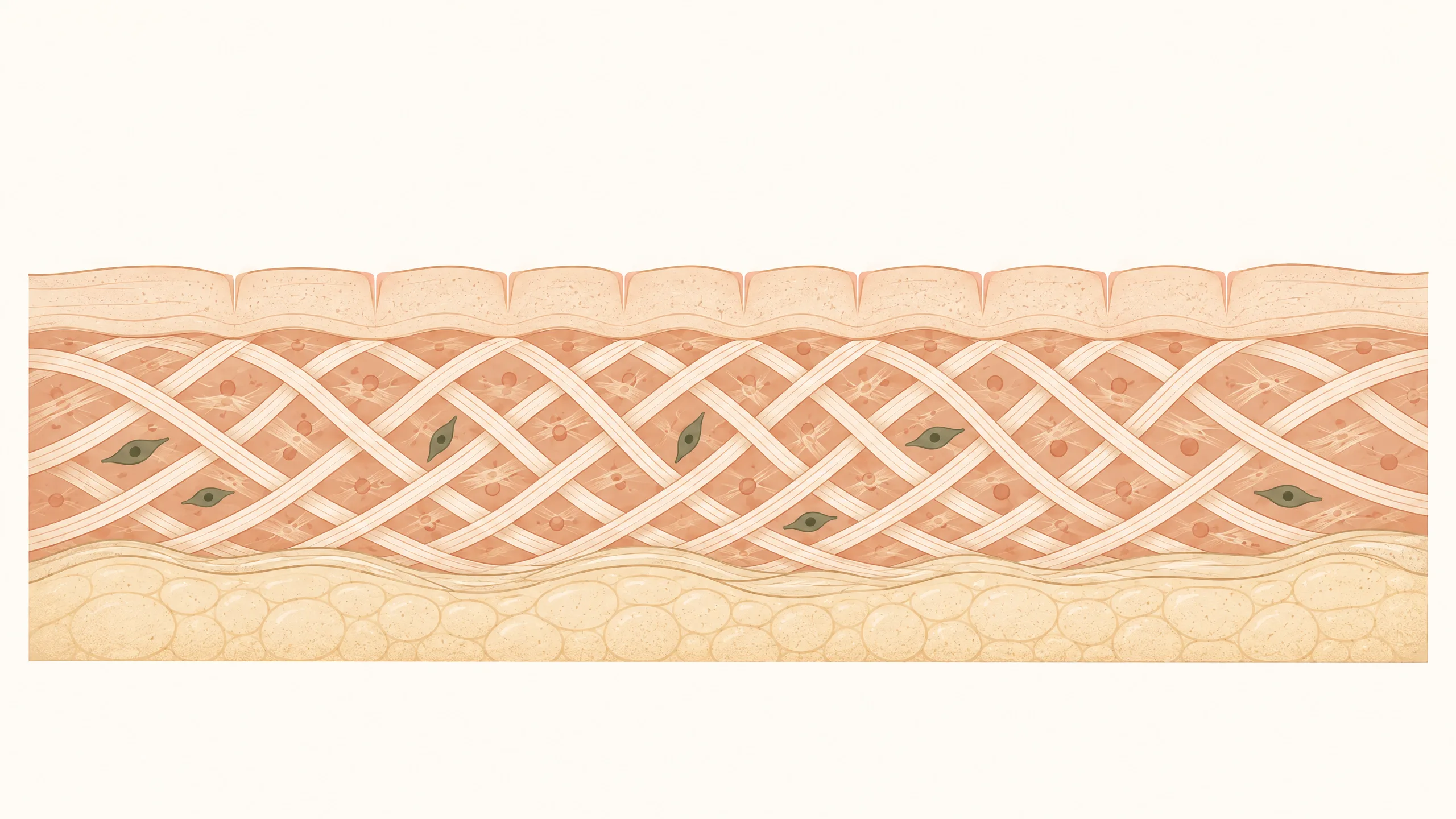

How microneedling works
Microneedling uses a device with fine needles to make tiny punctures in the skin. The menu describes it as creating "micro-injuries in the skin, stimulating collagen production and improving skin texture and tone." The AAD explains the same mechanism: results appear gradually as your body produces collagen, so this is not an instant-change treatment.
The service on the menu is microneedling "with skin growth factors," and the menu says the treatment "can be enhanced with growth factors to improve results." One thing worth knowing before you book anywhere: the FDA states it "has not cleared any microneedling devices for use with another product, which means the FDA hasn't reviewed the safety or effectiveness of combining microneedling devices with other products." If you want to know exactly which product is applied and why, ask when you book.
What microneedling is used for
The AAD lists these among the concerns microneedling can treat:
- Acne scars, as well as scars from surgery or injury
- Uneven skin texture and tone, and large pores
- Wrinkles and fine lines, and sagging skin
- Dark spots and melasma, and stretch marks
Being on that list does not mean every scar or every skin responds the same way. Acne scars come in different shapes and depths, and the right treatment depends on the scar type — a board-certified dermatologist is the person to assess deep or unusual scarring and tell you which approach suits it.
When microneedling is not the first step
Active, inflamed breakouts are a reason to wait: calm the acne first, which is what acne treatment is for. Microneedling works by stimulating collagen, so it is not a substitute for procedures that replace lost volume. And if your main concern is surface pigmentation or dullness rather than scarring or texture, a chemical peel is another option to discuss.
Recovery and results
According to the AAD, you can go back to work right away, but should wait 24 hours before applying makeup. Right afterwards the treated skin may look red (on lighter skin) or darker (on darker skin) and can feel sunburned, with minor discomfort, burning or swelling; the AAD says these reactions "usually disappear in a few days to a week." The FDA lists bleeding, bruising, redness, tightness, itching and peeling as common side effects that typically clear on their own within a few days or weeks, and names less common ones — dark or light spots, a cold-sore flare-up, and infection.
On results, the AAD says: "You may see improvement within a few weeks. It usually takes several months before you see full results." There is no fixed week-by-week schedule that applies to everyone, and nothing here is a promise of a particular outcome.
Professional microneedling vs. at-home rollers
At-home microneedling devices are widely sold, and the AAD cautions against treating them as risk-free. It warns that home use can lead to irritation from overuse, infection or scarring if the skin is pierced, accidental spread of viruses, and scarring or color and texture changes from pressing too hard. The FDA advises cleaning any home device between uses as the manufacturer directs, and never sharing one. If you are unsure whether a home device is right for your skin, ask a dermatologist before using it.
For any in-office session, the FDA suggests asking how the device is cleaned between clients, whether a new needle cartridge is used for each session, and what skincare guidelines apply afterwards.
Aftercare
The FDA notes that after microneedling your skin may be more sensitive to sun exposure and to products containing retinol, glycolic acid, menthol, capsaicin or alcohol, and that cosmetics, moisturizer or sunscreen can sting at first. Follow the aftercare instructions your provider gives you for your skin, and ask before restarting active ingredients or scheduling another treatment such as a peel. For general post-treatment routines, see our post on skincare after a peel.
How many sessions
For acne scars, the AAD says "you may need 3 to 5 treatments, which are performed every 2 to 4 weeks." The number that makes sense for you depends on your skin and your goals. Aesthetic OOGII sells microneedling as a single session at $300 or as a three-session package at $700 — $200 less than three single sessions.
Where to book
Aesthetic OOGII is at 450 Sutter St #1530 in Union Square, San Francisco, run by Oogii, a certified medical and clinical aesthetician. Microneedling sits on the same menu as chemical peels, acne treatments and dermaplaning. Current prices and packages are on the treatment menu.