What Is a Botinal Facial?
At Aesthetic OOGII, Botinal is one of two options named in the Dermaplaning with Clinical treatment with Collagen 90-II or Botinal, a 70-minute session priced at $275. Nothing is injected: the menu describes the dermaplaning as a non-invasive treatment that uses a specialized tool to gently scrape away dead skin cells and fine facial hair from the surface of the skin. The menu does not list what the Botinal product contains, so ask the studio before your appointment if you want the ingredient list.
Facials sold under similar names are built around peptides marketed as a needle-free answer to expression lines. One spa that sells a "Botinol" facial lists retinol, five peptides, Matrixyl, Myoxinol and Argireline among its ingredients and positions it as "a non-invasive alternative to injections" (Studio Vis-à-Vis). That is a different spa's product, and it tells you nothing definite about the Botinal used here. Argireline, one of the peptides it lists, has been studied in the laboratory, and the next two paragraphs summarize that research as general background only: neither study tested the Botinal product used at Aesthetic OOGII, and neither tested a dermaplaning session.
Argireline is acetyl hexapeptide-8. In the original laboratory work, published in the International Journal of Cosmetic Science in 2002, it interfered with the protein complex nerve endings use to release their signal, the same step botulinum toxin blocks, but with "much lower efficacy than the neurotoxin." An emulsion containing 10% of the peptide, applied by healthy women volunteers for 30 days, reduced wrinkle depth by up to 30%.
How far a topical peptide gets into skin matters too. A US Food and Drug Administration laboratory study of acetyl hexapeptide-8 in a cosmetic emulsion, using human cadaver and guinea pig skin, found that most of it washed off the surface, what penetrated stayed mostly in the outermost layer (the stratum corneum), and none was detected in the dermis (Kraeling et al., 2015). A peptide on the skin is not the same thing as Botox, which is injected into a specific muscle and blocks the nerve signal to it, so the muscle can't contract (American Society of Plastic Surgeons).
What It Can and Can't Do
Because the menu does not list Botinal's ingredients and no study we found tested it, the page can only describe the parts of the session that are documented:
- Fine expression lines: peptide facials are marketed for expression lines. The one Argireline study cited above used its own 10% emulsion applied daily for 30 days; it says nothing about what a single Botinal application during dermaplaning does, so ask the studio what the product is meant to do.
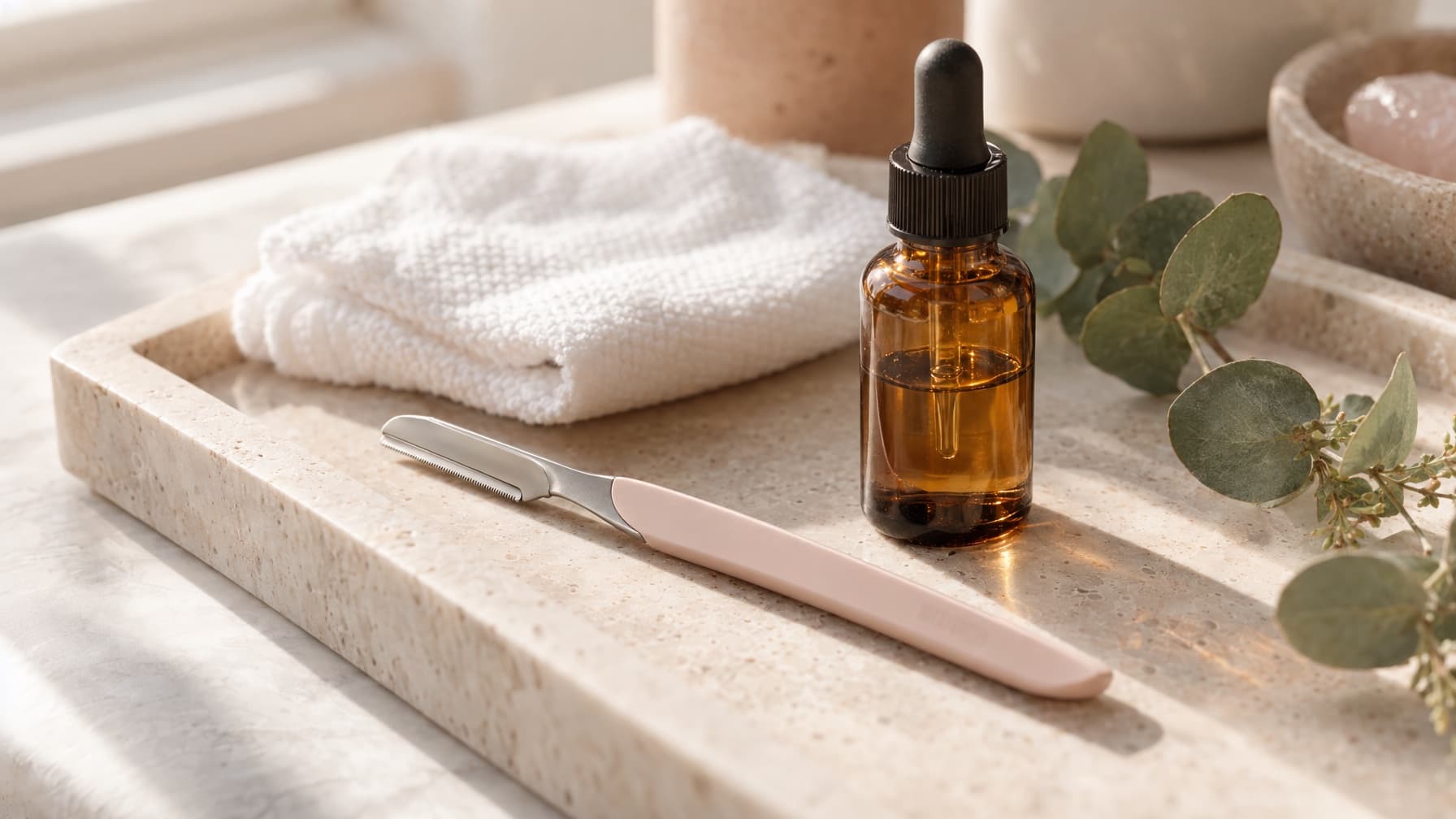
- Surface smoothness: the dermaplaning part of the session removes dead skin cells and fine facial hair from the surface of the skin. A dermatologist quoted by Cleveland Clinic says skin "will feel very smooth" after dermaplaning, and that clearing dead cells lets skincare and makeup go on more effectively (Cleveland Clinic).
Botinal is not an injectable. The ASPS describes botulinum toxin as temporarily reducing or eliminating facial fine lines and wrinkles by stopping the injected muscle from contracting; nothing in this session is injected, and no study we found shows a product applied during a facial doing the same.
Whether this treatment suits your skin is a question for the complimentary consultation. If the result you want is the one the ASPS describes for botulinum toxin, note that the studio's menu has no injectables.
A facial mask being applied, shown for illustration.
Botinal Facial vs. Botox vs. Microneedling
People often ask how a Botinal facial compares with the treatments they already know:
- Botinal facial vs. Botox: Botox injections block the nerve signals to the injected muscle, which temporarily reduces or eliminates fine lines and wrinkles (ASPS). No study we found compares the studio's Botinal product with Botox.
- Botinal facial vs. microneedling: microneedling uses thin needles to make tiny holes in the top layer of the skin to stimulate collagen and elastin; Cleveland Clinic lists fine lines, wrinkles, enlarged pores and acne scars among what it treats and says visible improvement takes 3 to 6 months (Cleveland Clinic). At Aesthetic OOGII it is a separate service, Microneedle Treatments with skin growth Factors, $300 for 60 minutes or $700 for three sessions. The Botinal option is not delivered by microneedling; it is part of the dermaplaning session.
- Cost at Aesthetic OOGII: the Dermaplaning with Clinical treatment with Collagen 90-II or Botinal is $275; the 3-session dermaplaning package is $650. The studio's menu has no injectables, so ask a provider who offers Botox about its pricing.
- Needles: Botox is given as a number of tiny injections into the treated area (MedlinePlus). The dermaplaning session involves no injection.
Results Timeline and How Many Sessions You'll Need
The 2002 Argireline study measured its result after 30 days of applying a 10% emulsion; it did not test a single in-office application, the Botinal product or freshly dermaplaned skin. The menu does not state a results timeline for Botinal and no published study we found gives one, so be wary of anyone who promises a specific result on a specific day.
What you notice right after the session is mostly the dermaplaning: dead skin cells and fine facial hair are removed from the surface. Ask at your consultation what, if anything, the Botinal step is expected to add.
If you plan more than one visit, the 3-session dermaplaning package is $650, compared with $275 for a single session; series packages must be redeemed within a calendar year. If you're deciding between a Botinal facial and other options on the treatment menu, think about your goal: the Clinical Anti Aging Treatment ($275, 75 minutes) and microneedling are the menu's other anti-aging options.
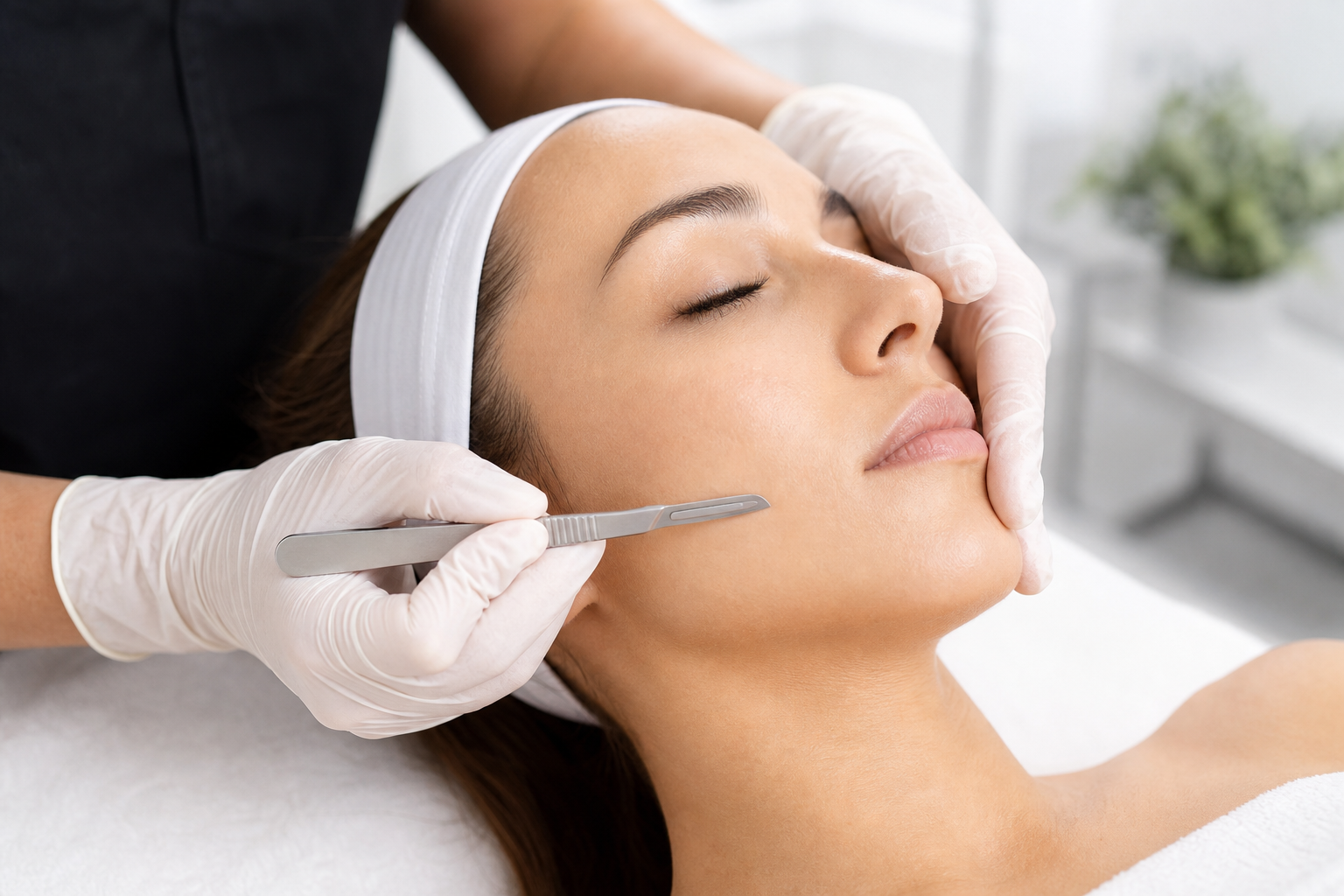
Dermaplaning, shown for illustration: a blade is drawn across the skin's surface.
What to Expect During Your Appointment
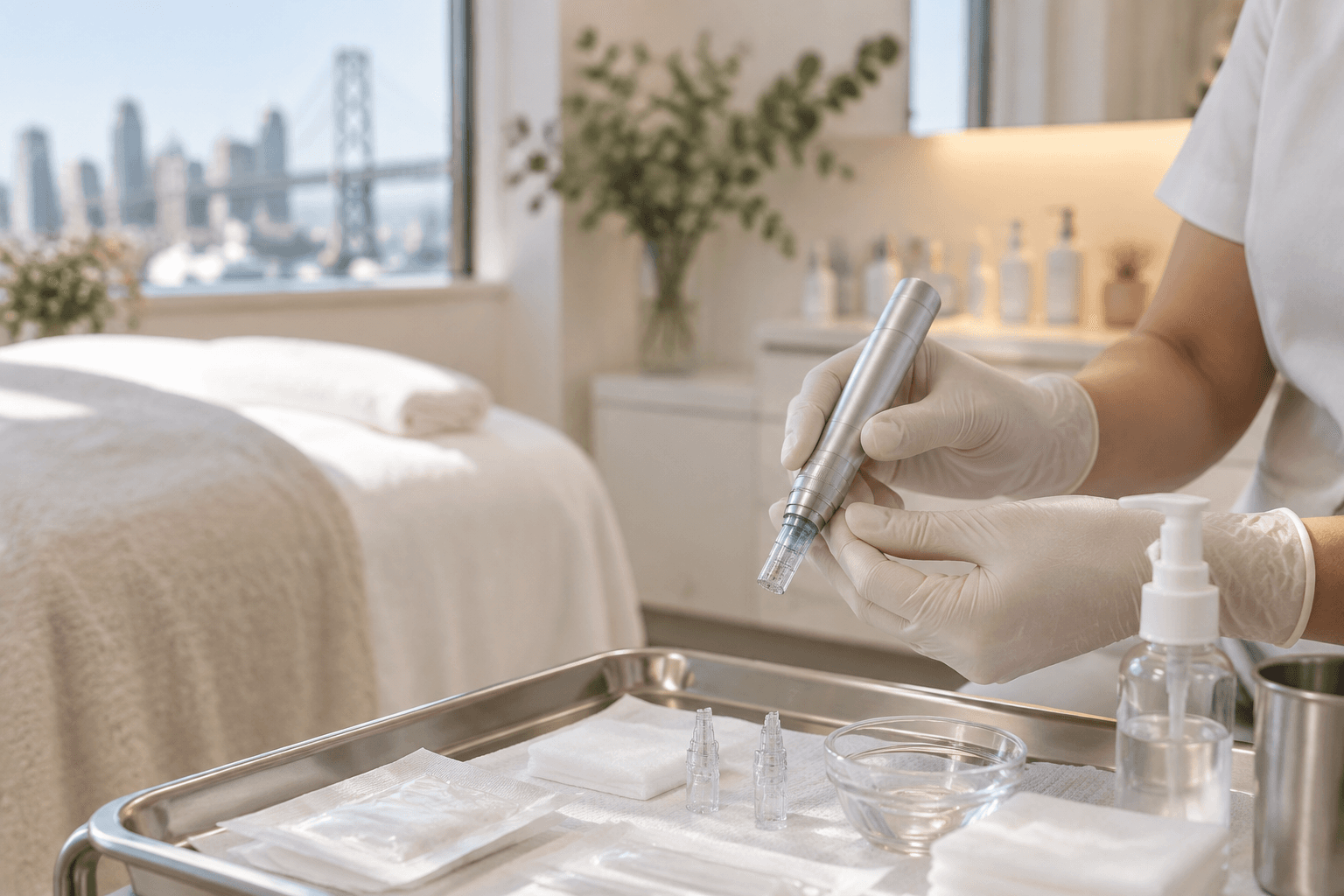
The Dermaplaning with Clinical treatment with Collagen 90-II or Botinal runs 70 minutes at the studio at 450 Sutter St, near Union Square. It pairs dermaplaning, which uses a specialized tool to gently scrape away dead skin cells and fine facial hair from the surface of the skin, with your choice of Collagen 90-II or Botinal. There's no injection and no needle.
Every client is offered a complimentary consultation with Oogii that includes an assessment of your skin, which is the place to ask what the Botinal step involves and whether this treatment suits you. The studio's policy asks you to mention any health conditions, allergies, injuries or recent medical procedures when you book, since some treatments and products are not recommended for everyone.
Aftercare and Who Should Wait on This Treatment
Cleveland Clinic says moisturizing and sunscreen are essential after dermaplaning (Cleveland Clinic). The American Academy of Dermatology recommends a broad-spectrum sunscreen with an SPF of 30 or higher. Ask at your appointment which products to hold off on for the next few days.
Cleveland Clinic notes that some people with preexisting skin concerns shouldn't have dermaplaning, and advises talking to your healthcare provider before the procedure if you have an active case of acne, cold sore outbreaks, eczema, moles, freckles, skin tags or other skin growths, psoriasis, skin burns such as those from radiation therapy, or skin rashes (contact dermatitis) (Cleveland Clinic). If any of those apply to you, raise it with your healthcare provider and with the studio before booking.
If you're taking or recently finished isotretinoin (Accutane), mention it when you book; MedlinePlus advises avoiding waxing, laser skin treatments and dermabrasion while on it and for 6 months afterward, because scarring is more likely. If you're pregnant or breastfeeding, check with your doctor before starting any new active skincare.
If your main goal is treating active breakouts rather than fine lines, the studio's acne treatment is the more direct option; Cleveland Clinic lists an active case of acne among the concerns to discuss with your healthcare provider before dermaplaning.
FAQ: Botinal Facials
Is a Botinal facial as effective as Botox?
No study we found compares them, and they are different kinds of treatment. Botox blocks nerve signals to the injected muscle so it cannot contract; nothing is injected in the dermaplaning session. Laboratory research on Argireline, a peptide listed in one similarly named facial, is general background only and did not test the studio's Botinal product.
What is in Botinal?
The studio's menu names Botinal but does not list its ingredients, so ask the studio. Facials sold under similar names, such as one spa's "Botinol" facial, list peptides including Argireline and Matrixyl, along with retinol, but that is another spa's product and not evidence of what Botinal contains.
Does a Botinal facial hurt?
There is no injection. The menu describes the dermaplaning part as gently scraping away dead skin cells and fine facial hair from the skin's surface. Ask at your consultation what the session feels like.
How much does a Botinal facial cost in San Francisco?
At Aesthetic OOGII, Botinal is part of the Dermaplaning with Clinical treatment with Collagen 90-II or Botinal, $275 for 70 minutes; a 3-session dermaplaning package is $650.
How soon will I see results?
A dermatologist quoted by Cleveland Clinic says skin will feel very smooth after dermaplaning, which removes dead skin cells and fine facial hair. The menu gives no results timeline for the Botinal step and no study we found tested it, so ask at your consultation what to expect.
Can I combine a Botinal facial with other treatments?
Ask during your consultation what fits your skin's current condition. On a separate visit, the menu also has the HydraFacial ($325, or $1,150 for six sessions), the Clinical Anti Aging Treatment ($275) and microneedling ($300).
Will my face feel frozen like Botox?
Nothing is injected in this session. The stilled muscle people associate with Botox comes from botulinum toxin injected into the muscle (ASPS). The menu does not list what Botinal contains, so if this is a concern, ask the studio about the product before you book.
Botinal Facial Pricing at Aesthetic OOGII
Botinal isn't sold as a stand-alone service. It's part of the Dermaplaning with Clinical treatment with Collagen 90-II or Botinal, a 70-minute session priced at $275, which pairs dermaplaning with your choice of Collagen 90-II or Botinal. If you plan more than one visit, the 3-session dermaplaning package is $650.
If you're weighing this against injectables, note that Aesthetic OOGII's menu has no injectables. The complimentary consultation with Oogii, which includes an assessment of your skin, is the place to talk through the menu's options against your skin and budget before booking.