
Why redness needs a name before a treatment
"Red face" describes what you see, not why it happens. The American Academy of Dermatology lists the signs that point toward rosacea: a tendency to flush or blush easily, often when you feel stressed, drink alcohol, become too warm or eat spicy food; small blood vessels that become visible on the face; skin that burns or stings when you wash it or apply certain products; and redness that worsens after time in the sun. The AAD also notes that most people with rosacea develop some, but not all, of these signs — and that a dermatologist can tell you whether you have rosacea.
That matters for what you book. Light treatment is aimed at visible vessels and pigment. It does not replace a diagnosis or a dermatologist’s condition-specific treatment plan, and it is not a treatment for eczema.
What the menu offers for redness
- IPL Photofacial — $300, 75 minutes. The menu describes intermittent flashes of light rather than a beam of constant brightness, spread over a wider area rather than focused on one point. UT Southwestern Medical Center explains that IPL emits multiple wavelengths that target melanin and hemoglobin, and lists broken blood vessels, spider veins, redness from rosacea, and brown spots among the conditions it is used for. A three-session package is $650. The IPL Photofacial page covers the treatment in more detail.
- Eczema Treatment — $195, 65 minutes. The menu lists deep cleansing, targeted therapies and LED light therapy, with an Eczema Mask "for soothing relief". It is a skincare service. Eczema itself is a medical condition for your doctor to diagnose and manage.
- Chemical peel — $300, 60 minutes. Not a redness treatment. The menu describes peels for fine lines, wrinkles, acne scars, hyperpigmentation and sun damage; it is included here so you can see where it sits relative to the other two.
What results the evidence describes
The AAD separates two kinds of redness. For visible blood vessels, it reports that most patients see a 50% to 75% reduction in visible vessels after one to three laser or light treatments, with treatments usually spaced three to four weeks apart. For permanent redness across the face, the picture is less clear: in a few small studies of lasers, some patients saw a considerable reduction, but most had about a 20% reduction, and the AAD says more research is needed. It also notes that results depend largely on the person performing the treatment, and that some redness after treatment is common.
UT Southwestern adds that stubborn concerns such as rosacea may need additional sessions, while mild concerns may respond more quickly. The three-session package is a pricing option — $650 against $900 for three single sessions — not a prediction of how many sessions your skin will need.
Rosacea
When dermatologists build a treatment plan for rosacea, the AAD says it often consists of medication, a rosacea-friendly skin care plan and tips to help you avoid flare-ups, with lasers and lights used for particular signs such as visible vessels. If you think you have rosacea and have not been diagnosed, see a dermatologist; DermNet also stresses that the correct diagnosis should be made by your doctor before IPL treatment.
What an IPL session involves
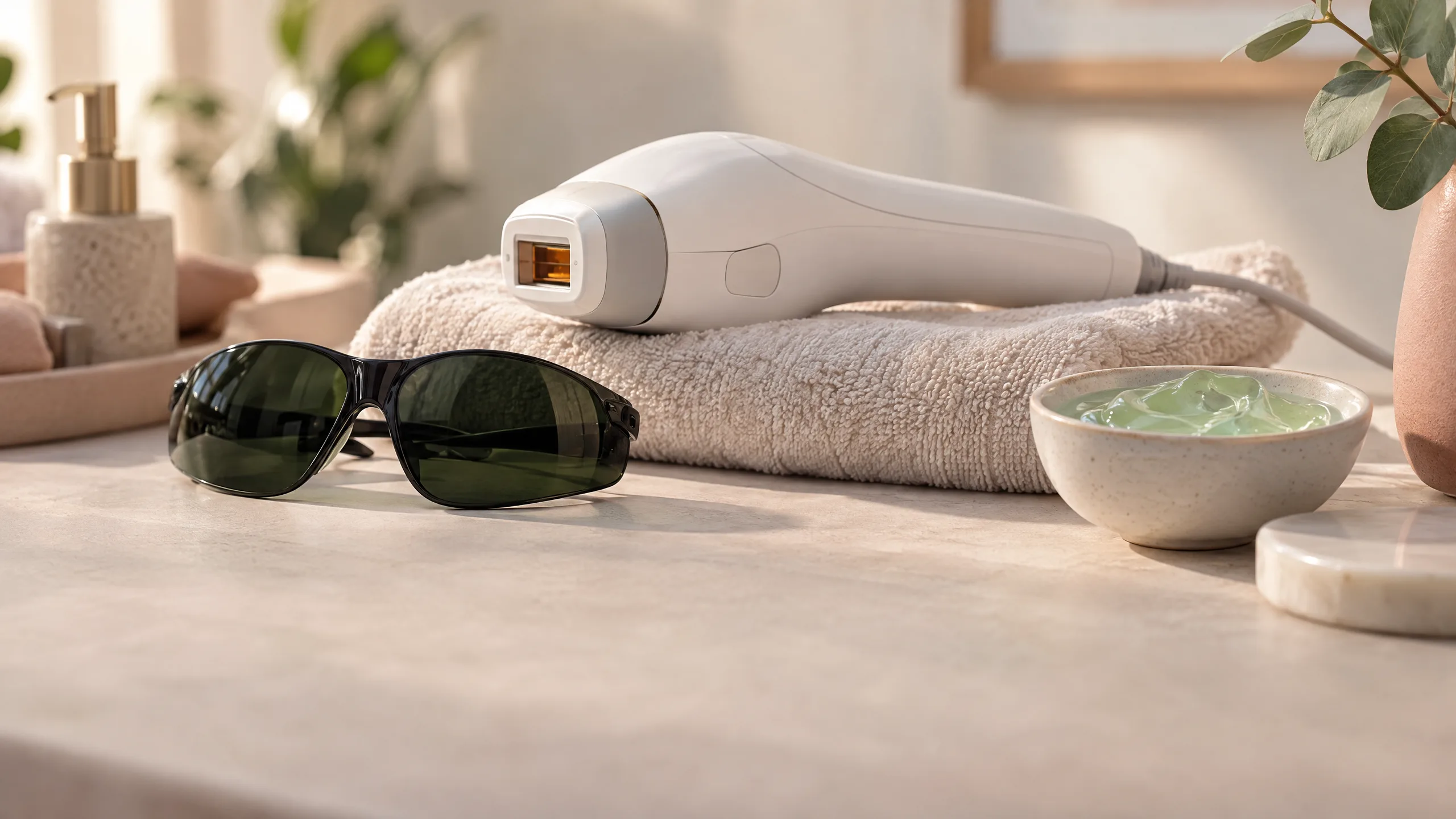
UT Southwestern and DermNet describe the same basic procedure: a cold gel is applied to the skin, you wear protective eyewear throughout, and the device delivers pulses of light over the area. UT Southwestern describes the sensation as a slight sting, similar to a rubber band snapping. Afterward, DermNet describes skin turning pink and a little sore, and a sensation like a mild sunburn — redness, peeling, swelling — that may last a few days.
Who should wait or check first
UT Southwestern lists reasons to avoid IPL: an active skin infection, significant scarring, a recent tan from sunlight or tanning beds, pregnancy, and certain medications such as isotretinoin. DermNet advises avoiding sun exposure in the days and weeks before and after treatment. The studio's policy asks every client to tell it at booking about any health conditions, allergies, injuries, recent medical procedures or special needs that may affect a service — include any medications you take.
Skin tone matters too. UT Southwestern describes ideal IPL candidates as people with light to medium skin tones (Fitzpatrick I–III); people with darker skin tones (Fitzpatrick IV–VI) or conditions like melasma may not be good candidates, because IPL can cause hyperpigmentation or worsen existing discoloration.
Sun spots and pigmentation
Brown sun spots are a different concern from redness, though IPL targets both melanin and hemoglobin. UT Southwestern notes that pigmented areas may darken at first before they flake off over the next few days.
A pigmented spot that is new, changing, or different from your others should be seen by a doctor before any light treatment, in keeping with DermNet's advice that the correct diagnosis is made before IPL.
Aftercare
UT Southwestern advises avoiding sun exposure during recovery and using sunscreen with an SPF of at least 30, and notes that consistent sunscreen use can help prolong the benefits of IPL. If you have severe side effects or signs of infection, it advises contacting your dermatologist. For care after an Eczema Treatment, follow what Oogii recommends at your visit.
Booking and where to find us
Aesthetic OOGII is at 450 Sutter St #1530 in Union Square, San Francisco. Oogii is a certified medical and clinical aesthetician. Every client is offered a complimentary consultation, which includes an assessment of your skin to recommend a course of treatment. You can book the IPL Photofacial, the three-session package or the Eczema Treatment from the online menu, or call +1-415-757-0265. The studio asks for 24 hours' notice to cancel or reschedule.