
IPL Photofacial San Francisco: Cost, Results & Guide
What IPL treats, session pricing in SF, downtime, results timeline, and how it compares to laser treatments for sun damage and redness.
What Is an IPL Photofacial?
IPL stands for Intense Pulsed Light. It's a non-invasive treatment that uses broad-spectrum light to target pigment, redness, and sun damage in your skin. Unlike lasers that emit a single wavelength, IPL delivers multiple wavelengths at once — think of it as a camera flash calibrated to heat up unwanted color in your skin without damaging the surface.
At Aesthetic OOGII, we use IPL photofacials to treat brown spots, broken capillaries, rosacea redness, and uneven tone caused by years of sun exposure. The light energy gets absorbed by melanin (dark spots) and hemoglobin (red blood vessels), heating them until they break apart. Your body then clears the debris over the next few weeks, leaving clearer, more even skin.
IPL isn't a quick fix. You'll need 3-5 sessions spaced 3-4 weeks apart to see significant improvement. Each session takes about 30 minutes, and most people describe the sensation as a rubber band snapping against their skin — uncomfortable but tolerable. We apply a cooling gel before treatment to minimize discomfort.
The treatment works best on lighter skin tones (Fitzpatrick types I-III). If you've got darker skin, IPL carries a higher risk of hyperpigmentation because the light can't easily distinguish between the pigment you want gone and your natural skin tone. For deeper skin tones, we'd recommend laser treatments with longer wavelengths that target pigment more precisely.
What IPL Treats (And What It Doesn't)
IPL is best for surface-level color issues — anything that's brown or red. Here's what it handles well:
- Sun damage and age spots: Those flat brown patches that show up on your cheeks, forehead, and hands after years of UV exposure respond beautifully to IPL. The pigment darkens for a few days, then flakes off like coffee grounds.
- Rosacea and facial redness: IPL collapses the tiny broken capillaries that cause persistent flushing. If you've got a baseline red tone across your cheeks and nose, IPL can dial it down significantly.
- Broken blood vessels: Those spider veins on your nose and cheeks disappear after 2-3 sessions as the heat coagulates the vessel walls.
- Uneven skin tone: Patchiness, freckles, and mottled pigmentation from sun damage all improve with a full IPL series.
- Some types of acne: IPL's antibacterial effect can help with inflammatory acne, though dedicated acne treatments like chemical peels or blue light therapy are more effective.
What IPL doesn't fix: deep wrinkles, sagging skin, acne scars, or textural issues. For those, you'd need microneedling, RF microneedling, or laser resurfacing. IPL addresses color, not structure.
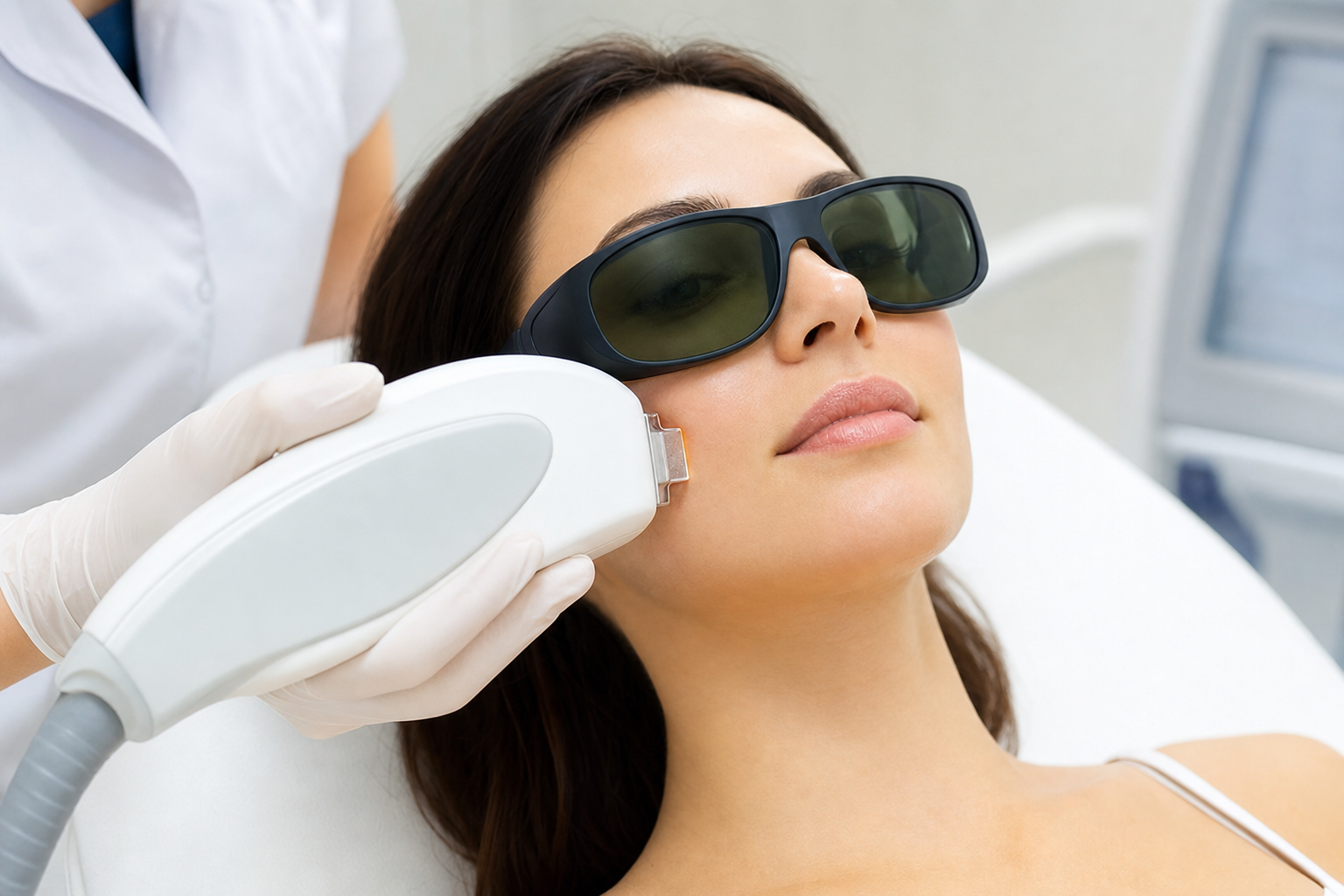
IPL photofacial treatment targets sun damage, redness, and broken capillaries.
IPL Photofacial Cost in San Francisco
In San Francisco, you'll pay $300-$600 per IPL session depending on the treatment area and the provider's expertise. Full-face treatments run $400-$500 at most med spas in the city. Smaller areas like just the nose and cheeks might cost $250-$350.
Here's the catch: you need multiple sessions. A typical treatment series is 3-5 sessions spaced 3-4 weeks apart, so your total investment is $1,200-$2,500 for complete correction. Some clinics offer package pricing that brings the per-session cost down to $350-$400 if you prepay for a series of 4-5 treatments.
Why the variation? Equipment quality, provider training, and location all factor in. High-end devices like the Lumenis M22 or Sciton BBL (which is technically IPL despite the "laser" in its name) deliver better results and cost more to operate. A physician-supervised clinic will charge more than a technician-run spa, but you're also getting medical oversight and better post-treatment support.
At Aesthetic OOGII, we use medical-grade IPL equipment and all treatments are supervised by our clinical team. We'll give you an honest assessment during your consultation — if your skin concerns would respond better to a different treatment, we'll tell you before you spend a dime.
Don't expect insurance to cover IPL. It's considered cosmetic unless you're treating a diagnosed medical condition like rosacea, and even then coverage is rare.
What to Expect During Treatment
Your first visit starts with a consultation. We'll examine your skin, discuss your goals, and confirm you're a good candidate. If you've been tanning or using retinoids, you'll need to stop 2-4 weeks before treatment — both make your skin more sensitive to light and increase the risk of burns or pigmentation.
On treatment day, you'll arrive with a clean face (no makeup, no lotions, no sunscreen). We apply a cooling gel to the treatment area and hand you protective eyewear — the light flashes are bright enough to damage your retina if you look directly at them. Then we start pulsing the IPL handpiece across your skin in a grid pattern, section by section.
Each pulse feels like a hot rubber band snap. It's not pleasant, but most people tolerate it without numbing cream. Sensitive areas like the upper lip and nose hurt more than the cheeks or forehead. The whole session takes 20-30 minutes for a full face.
Immediately after treatment, your skin will be pink and warm, like a mild sunburn. We apply a soothing gel and send you home with aftercare instructions. The redness fades within a few hours for most people, though it can last up to 24 hours if you're treating broken capillaries or rosacea.
Here's what happens next: brown spots darken over 2-3 days, then start flaking off like coffee grounds around day 5-7. Redness from broken capillaries fades gradually over 2-3 weeks as your body reabsorbs the coagulated vessels. You won't see final results until 2-3 weeks after each session, which is why we space treatments 3-4 weeks apart.
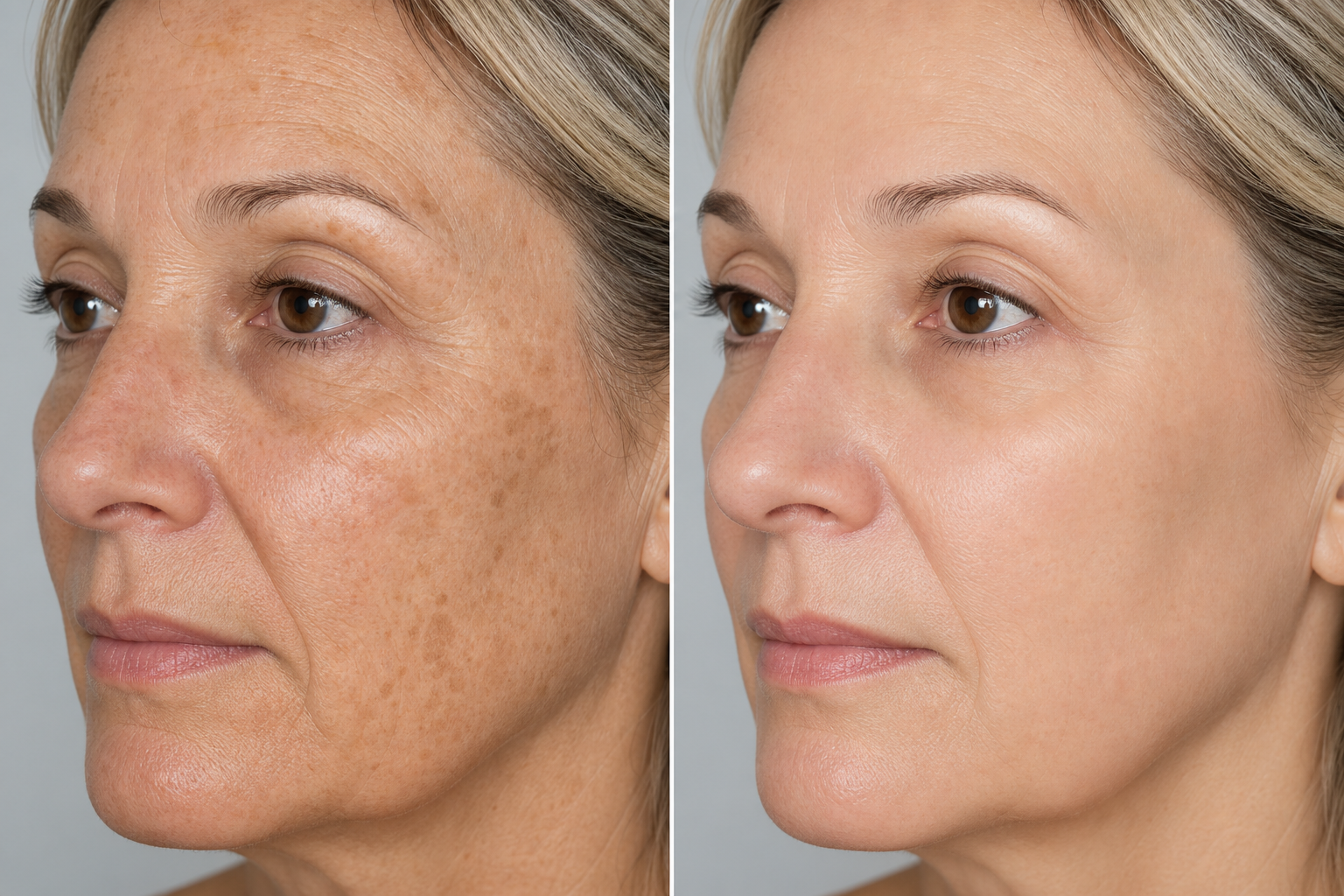
IPL photofacial results showing reduction in sun damage and hyperpigmentation after a treatment series.
Downtime and Aftercare
IPL is often marketed as a "lunchtime" treatment with zero downtime. That's partly true — you can go back to work the same day — but you'll look like you've got a sunburn for a few hours, and dark spots will look worse before they look better.
For the first 24 hours, avoid hot showers, saunas, intense exercise, and anything that raises your core temperature. Heat can worsen swelling and redness. Skip active skincare ingredients like retinoids, AHAs, and vitamin C for 3-5 days after treatment. Your skin is more vulnerable to irritation during the healing window.
The most important rule: stay out of the sun and wear SPF 30+ every single day, even indoors. UV exposure in the weeks after IPL can trigger post-inflammatory hyperpigmentation, leaving you with darker spots than you started with. We're not kidding about this — one afternoon at the beach without sunscreen can undo your entire treatment.
As brown spots darken and flake off, don't pick at them. Let them shed naturally. Picking can cause scarring or pigmentation. Keep your skin moisturized with a gentle, fragrance-free lotion. Avoid makeup for the first 12-24 hours if possible, or use mineral-based products that won't clog your pores.
Most people return to their normal routine within 24-48 hours. The worst of the flaking happens around day 5-7, but it's not dramatic — think light peeling, not sheets of skin. If you're treating redness or rosacea, you might notice temporary increased flushing for a few days before it calms down.
IPL vs. Laser Treatments: What's the Difference?
People use "IPL" and "laser" interchangeably, but they're not the same. Lasers emit a single, focused wavelength of light. IPL emits a broad spectrum of wavelengths (500-1200nm), which makes it less precise but more versatile.
Lasers are better for targeted problems. If you've got one stubborn brown spot or a single broken capillary, a laser can zap it in one session with surgical precision. IPL is better for diffuse issues — overall redness, scattered sun damage, or general tone improvement across a larger area. Think of lasers as a sniper rifle and IPL as a shotgun.
IPL is also gentler on your skin. Because the energy is spread across multiple wavelengths, there's less heat concentrated in any one spot, which means lower risk of burns or hyperpigmentation. Lasers deliver more aggressive results but also carry higher risk, especially on darker skin tones.
Another difference: downtime. Ablative lasers (like CO2 or erbium) remove the top layer of skin and require 7-14 days of healing. Non-ablative lasers (like Nd:YAG or alexandrite) have minimal downtime but still cause more redness and swelling than IPL. IPL sits in the "low downtime, moderate results" category — perfect if you need to look presentable the next day.
If you're choosing between IPL and laser hair removal for your upper lip or chin, that's a different conversation. For permanent hair reduction, laser wins. IPL can work for hair removal, but it's less effective and takes more sessions. For pigment and redness correction, IPL is the workhorse treatment.
Who's a Good Candidate for IPL?
IPL works best on lighter skin tones with visible sun damage, redness, or broken capillaries. Ideal candidates are Fitzpatrick skin types I-III (pale to light brown). If you've got fair skin that burns easily and shows freckles, age spots, or rosacea, you're a prime candidate.
You're NOT a good candidate if you've got darker skin (Fitzpatrick IV-VI). The melanin in your skin competes with the melanin in the brown spots you're trying to remove, so the IPL can't tell the difference. This increases the risk of hyperpigmentation or burns. For darker skin tones, we'd recommend Q-switched lasers or chemical peels that target pigment more selectively.
You'll also need to avoid IPL if you're pregnant, taking photosensitizing medications (like certain antibiotics or isotretinoin), or have active infections, open wounds, or keloid scarring history. If you've got a spray tan or recent sun exposure, you'll need to wait 4 weeks before treatment.
People with realistic expectations do best. IPL won't give you flawless skin in one session. It takes 3-5 treatments to see significant improvement, and even then you'll need maintenance sessions every 6-12 months to keep results. If you want dramatic overnight transformation, IPL isn't the answer. If you want gradual, natural-looking improvement over a few months, it's perfect.
If you're not sure whether IPL is right for you, book a consultation. We'll examine your skin, discuss alternatives, and build a treatment plan that matches your goals and budget. Sometimes a combination approach — like IPL for pigment plus microneedling for texture — delivers better results than one treatment alone.
Frequently Asked Questions
How long do IPL photofacial results last?
Results from a full IPL series (3-5 sessions) typically last 1-2 years, but it depends on your sun exposure and skincare routine. If you're religious about sunscreen and avoid tanning, you can maintain results for 18-24 months before needing a touch-up session. If you're spending weekends at the beach without SPF, new sun damage will appear within 6-12 months. Most people do annual maintenance sessions to keep their skin looking clear.
Does IPL hurt?
IPL feels like a hot rubber band snapping against your skin. It's not comfortable, but most people tolerate it without numbing cream. Sensitive areas like the upper lip, nose, and jawline hurt more than the cheeks or forehead. The sensation lasts only as long as the pulse (a fraction of a second), and the cooling gel helps. If you've got a low pain tolerance, we can apply topical numbing cream 20-30 minutes before treatment.
Can IPL remove dark spots permanently?
IPL can remove existing dark spots, but it won't prevent new ones from forming. Sun damage is cumulative — if you don't wear sunscreen daily after treatment, new spots will appear. Think of IPL as hitting the reset button. It clears the damage you've accumulated, but you need consistent sun protection to keep results. Annual touch-up sessions can address any new pigmentation that appears.
How many IPL sessions will I need?
Most people need 3-5 sessions spaced 3-4 weeks apart for complete correction. Mild sun damage might respond in 2-3 sessions. Stubborn pigmentation, rosacea, or diffuse redness usually takes 4-5 sessions. After your initial series, you'll likely need maintenance sessions once or twice a year to keep results.
Can I wear makeup after IPL?
Wait at least 12-24 hours before applying makeup. Your skin needs time to cool down and recover from the light energy. If you must wear makeup the same day, use mineral-based products that won't clog your pores or irritate your skin. Avoid heavy foundations or products with active ingredients like retinol or acids for the first 3-5 days after treatment.
IPL Cost Comparison: Aesthetic OOGII vs. San Francisco Med Spas
Here's how our IPL photofacial pricing stacks up against the typical San Francisco range:
- Aesthetic OOGII single session: $300 full face, medical-grade equipment, clinical team supervision.
- Aesthetic OOGII 3-session package: $650 total (about $217/session), our most-booked option for a full correction series.
- Typical SF med spa range: $300-$450 per session for full-face treatment, per current market pricing at comparable Union Square and downtown clinics.
- Typical SF package pricing: $1,200-$1,800 for a 3-5 session series at competitor clinics.
Our single-session price sits below the typical $300-$450 SF range, and our package rate brings the per-session cost down further. Because most people need 3-5 sessions for full correction, the package is where the real savings show up: booking three sessions individually would run $900 at our single-session rate, so the $650 package saves $250 up front.
IPL Photofacial Cost: Aesthetic OOGII vs. San Francisco Average
IPL pricing varies widely across San Francisco med spas, and that variation is one of the most common points of confusion for first-time clients. Here's how our pricing compares:
- Aesthetic OOGII single session: $285
- Aesthetic OOGII 3-session package: $750 ($250/session, a 12% savings over single-session pricing)
- San Francisco market range: $300-$450 per session at comparable clinics
- National average (per industry pricing surveys): $200-$600 depending on treatment area and device type
Results Timeline: What to Expect Week by Week
- Days 1-3: mild redness and warmth, similar to a light sunburn; pigmented spots may darken temporarily before they flake off
- Days 4-10: darkened sun spots and freckles begin flaking away; skin tone starts to even out
- Weeks 2-4: visible reduction in redness and broken capillaries; collagen remodeling begins
- Weeks 4-6: full results visible from a single session; most clients book their next session in this window
Most clients need 3-5 sessions spaced 3-4 weeks apart for sun damage and rosacea-related redness, which is why we price the 3-session package below the per-session rate. One session improves tone; a full series is what produces the lasting change most clients are after.